


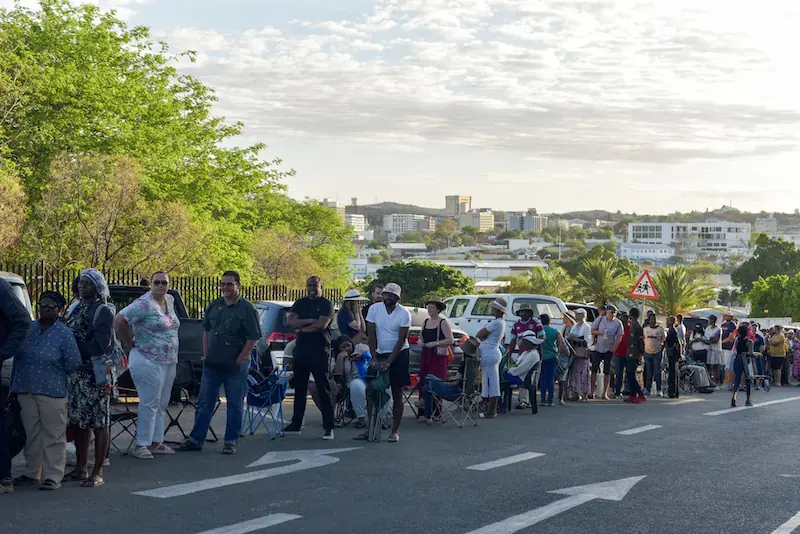


In the bustling streets of Windhoek, Namibians lined up outside polling stations under the morning sun, eager to cast their votes in a pivotal election that could potentially reshape the nation's political landscape. The ruling SWAPO party, which has held power since independence in 1990, faces a formidable challenge from a population increasingly restless with issues of unemployment, inequality, and corruption.
As the long-standing party of SWAPO seeks to maintain its grip on power, Vice President Netumbo Nandi-Ndaitwah stands as a historic candidate, poised to become Namibia's first female president if victorious. However, the winds of change may be blowing through the country, with a diverse field of opposition candidates, led by the popular dentist-turned-politician Panduleni Itula, vying for a chance to lead.
The electorate's frustrations are palpable, as demonstrated by the lengthy queues snaking outside polling stations. The youth, in particular, seem determined to make their voices heard, fueled by a desire for meaningful change in a nation grappling with economic challenges exacerbated by droughts and the COVID-19 pandemic.
Against a backdrop of economic growth driven by investments in key sectors, Namibia still grapples with stark income inequality, ranking among the highest globally. Faced with this reality, Nandi-Ndaitwah emphasized the urgent need for job creation, especially for the country's youth, who bear the brunt of these disparities.
With around 1.4 million registered voters participating in this crucial election, the stage is set for a political showdown that could reshape Namibia's future. As the nation anxiously awaits the results, the outcome of this election holds the promise of ushering in a new era for Namibia, steering it towards a path of progress, inclusivity, and prosperity.