


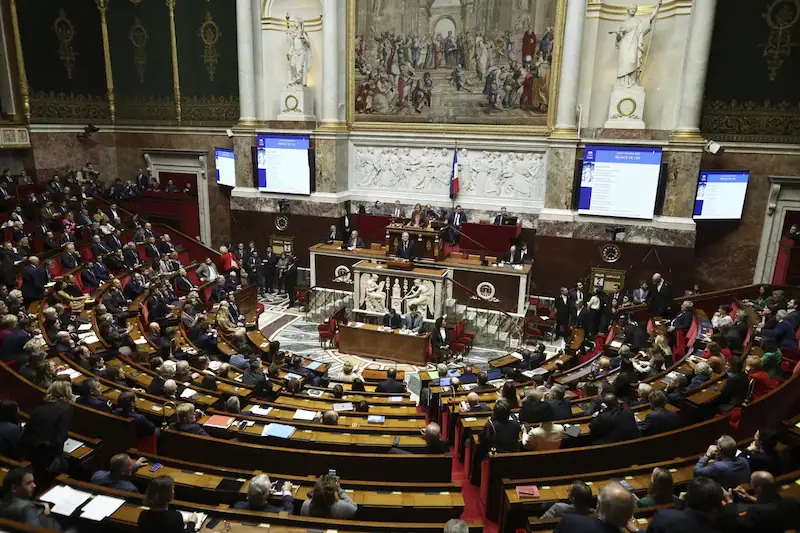


In a stunning turn of events, French lawmakers are set to hold a no-confidence vote on Wednesday, with an unexpected alliance between far-right leader Marine Le Pen and the left-wing coalition aiming to topple Prime Minister Michel Barnier's government. The trigger for this political upheaval was Barnier's move to push through an unpopular budget using a constitutional mechanism, which ignited immediate backlash from both ends of the political spectrum.
The potential downfall of Barnier's administration, if the motion successfully passes, would mark the shortest tenure for a prime minister in the history of France's Fifth Republic. This rapid collapse underscores the growing influence of Le Pen, who has capitalized on the opportunity presented by President Emmanuel Macron's unexpected call for elections in June.
The heightened uncertainty surrounding the budget has led to a negative response from bond investors, resulting in increased borrowing costs for France. The spread between French and German bond yields widened significantly, pointing to the unease in financial markets amid the political turmoil. Despite a slight narrowing of this gauge and a rise in the country's stock market, the looming government collapse has raised concerns about the economic consequences.
If Barnier is ousted, it will fall upon Macron to appoint a new prime minister to navigate the challenging task of passing a fresh budget. However, given the fragmented parliament and the lack of a majority, the president's choice will not be an easy one. The possibility of emergency laws being utilized to ensure minimal spending and tax collection in a caretaker capacity adds another layer of complexity to the situation.
As voices from the left call for Macron's resignation, the president's position remains secure, with the next presidential election not scheduled until 2027. With Le Pen emerging as a frontrunner, the political landscape in France is poised for further shifts and uncertainties in the coming years.
Investors, already wary of France's political instability, are closely monitoring the situation, especially as the government aims to address its deficit through significant tax increases and spending cuts. The outcome of the no-confidence vote and its aftermath will undoubtedly have far-reaching implications for France's economic and political future.