


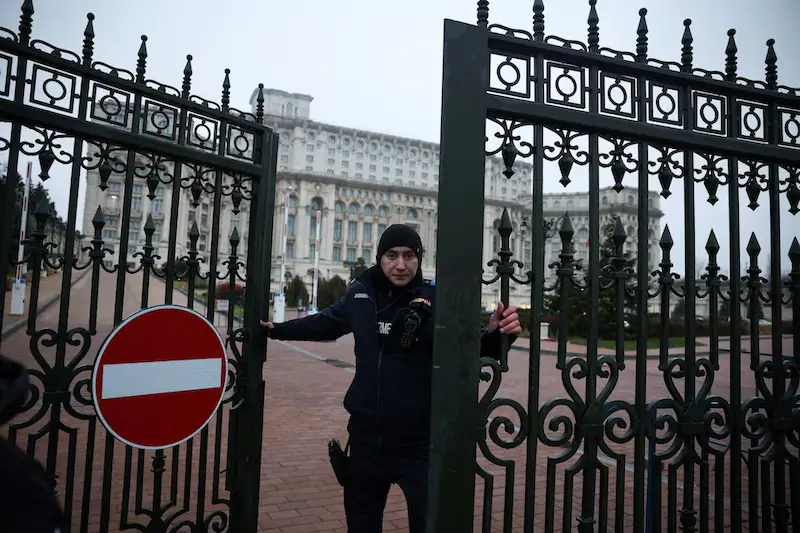


Romania's highest court made a groundbreaking decision on Friday, annulling the ongoing presidential election due to accusations of Russian interference. The court declared that the entire electoral process would need to be re-run, disrupting the political landscape and throwing the country into a state of uncertainty.
The election, which was set to conclude this weekend with a second-round vote, was marred by controversy when far-right, pro-Russian candidate Calin Georgescu unexpectedly surged to first place in the initial round. This unexpected turn raised suspicions of foul play and prompted the court's intervention.
Georgescu's candidacy, advocating for a shift in Romania's foreign policy towards Russia and away from support for Ukraine, posed a significant threat to the country's pro-European Union stance. The court's decision to void the election result highlighted the vulnerabilities in Romania's institutions and the significant challenges posed by external interference.
While the ruling plunged Romania into institutional chaos, analysts foresee potential protests and challenges to the nation's pro-Western trajectory. With the current President's term ending soon, the situation further complicates the political landscape as the country navigates the re-running of the presidential election alongside upcoming parliamentary responsibilities.
The court's decision came in response to declassified documents exposing Russian hybrid attacks during the election period. These revelations cast a shadow over the legitimacy of the electoral process, leading to the unprecedented move to annul and re-run the election.
As Romania grapples with the aftermath of this ruling, questions remain about Georgescu's eligibility to participate in the re-run and the potential impact on the nation's political future. With ongoing investigations into his campaign and concerns over further interference, the road ahead for Romania's democracy remains uncertain.
Despite the financial markets' positive reaction to the court's decision, concerns linger over the country's stability and relations with the EU and NATO. The coming days will hold significant implications for Romania as it navigates this critical juncture in its political history.