


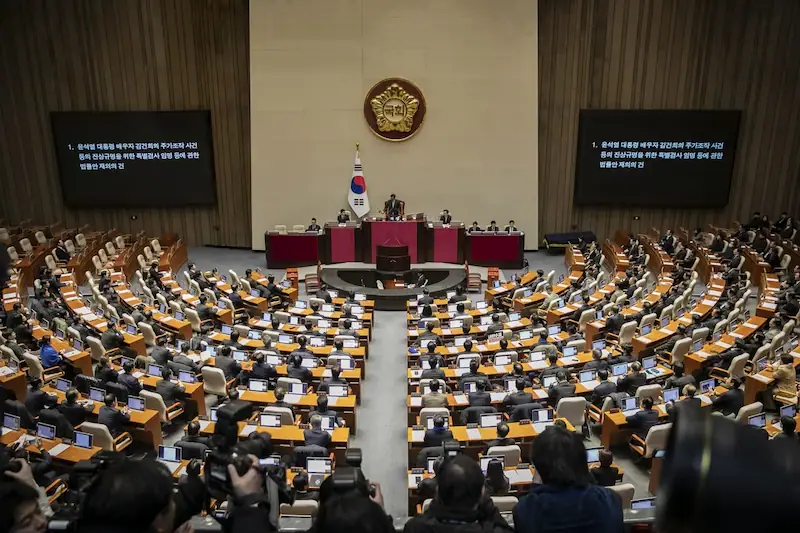


In a surprising turn of events, South Korean President Yoon Suk Yeol managed to survive an impeachment attempt on Saturday as the ruling party refused to support the motion. The impeachment vote fell short of the necessary 200 votes required to suspend the president, with the ruling party opting to boycott the vote. Despite some members defecting and voting in favor of impeachment, it became evident that the motion would not pass.
The opposition, holding a majority in the legislative body, has expressed its intent to swiftly push for another vote to remove the president from office. This move follows President Yoon's controversial declaration of martial law - a decision that sent shockwaves through the nation and its allies. Yoon eventually revoked the order after facing swift opposition from lawmakers.
While Yoon remains in office for now, the ruling People Power Party must act swiftly to stabilize the situation and prevent escalating public unrest. Party leader Han Dong-hoon pledged to facilitate the president's orderly exit to mitigate turmoil. Meanwhile, Prime Minister Han Duck-soo will take the lead in managing state affairs in consultation with the ruling party and opposition.
Following the failed impeachment attempt, opposition leader Lee Jae-myung criticized the ruling party for betraying the public and promised to continue efforts to impeach Yoon Suk Yeol. The ruling party's decision to boycott the vote came after President Yoon expressed remorse for the political crisis and deferred his fate to the party.
Despite the tense political climate, the opposition sought the cooperation of ruling party members in the impeachment process. Ultimately, the vote hinged on a few defectors from the ruling party, resulting in a deadlock that persisted until the end of the voting period. The massive crowds outside the National Assembly reflected the nation's divided sentiments, with both pro and anti-Yoon groups making their voices heard.
As South Korea grapples with political uncertainty, market analysts predict prolonged instability that could weigh on the country's equities market. The prospect of defections within the ruling party and mounting pressure from the opposition indicate that the road ahead for South Korea remains turbulent. The aftermath of this failed impeachment attempt leaves a deeply divided nation grappling with its democratic principles and the future of its leadership.