


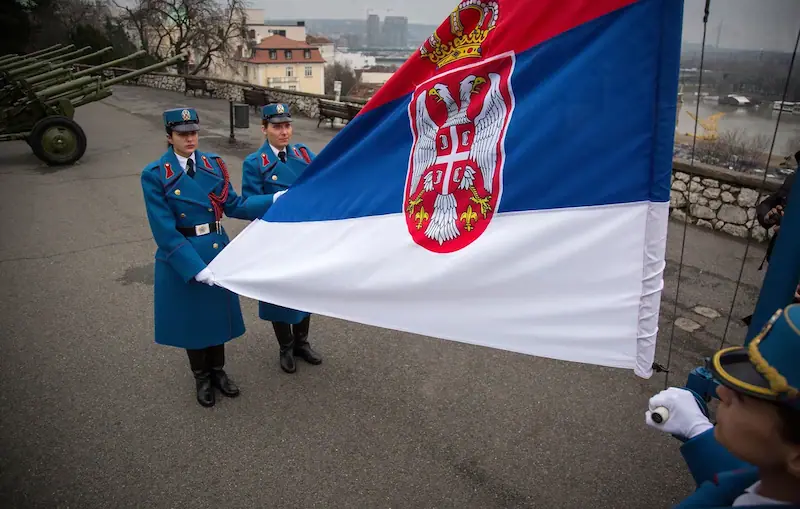


In a significant development, the Dutch government has taken a decisive stance to impede Serbia's advancement in its European Union membership negotiations. The decision, communicated by Dutch Foreign Minister Caspar Veldkamp in Brussels, underscores the Netherlands' belief that Serbia is not adequately prepared for the next phase of EU accession talks.
At the heart of the matter lies Serbia's refusal to acknowledge the 2008 secession of Kosovo, its former province. This longstanding dispute has hindered Serbia's progress towards EU membership for over two decades. Additionally, concerns have been raised regarding the fairness of Serbia's electoral processes under President Aleksandar Vucic's leadership, further complicating its path to EU accession.
Moreover, Serbia's reluctance to align with the EU's sanctions against Russia following the invasion of Ukraine has also raised eyebrows within the European community. The delicate balancing act pursued by Vucic's government in navigating relations with Western nations, Russia, and China adds another layer of complexity to the situation.
As Serbia grapples with these challenges, it faces a critical decision regarding its gas supply contract with Russia, which is set to expire in March. Despite condemning the Russian invasion of Ukraine, Serbia is contemplating extending its energy agreement with Moscow, highlighting the intricate geopolitical landscape it must navigate.
The Dutch government's firm stance serves as a reminder of the rigorous criteria and standards that aspiring EU members must meet. As Serbia confronts these obstacles on its path to EU integration, the need for addressing key issues such as the Kosovo dispute, electoral transparency, and foreign policy alignment becomes increasingly pressing.