


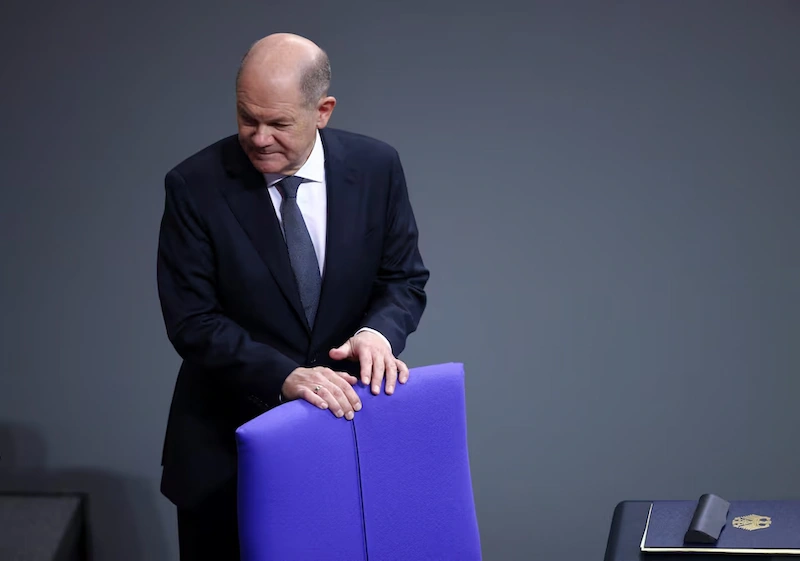


In a crucial parliamentary session, the German parliament has approved Chancellor Olaf Scholz's proposal to dissolve the government, paving the way for an early election on February 23. The decision comes in the wake of the collapse of Scholz's coalition following the resignation of the Free Democrats over disagreements on debt issues, leaving the Social Democrats and the Greens without a majority.
President Frank-Walter Steinmeier will now oversee the process of calling for a new election following the confidence vote in which Scholz and his government lost support. The political debate leading up to the vote revealed the intense campaigning atmosphere as party leaders engaged in heated exchanges.
Chancellor Scholz, defending his crisis management record amid economic challenges exacerbated by Russia's invasion of Ukraine, emphasized the need for investment in infrastructure over austerity measures. On the other hand, conservative challenger Friedrich Merz criticized Scholz for burdening future generations with excessive spending and failing to address crucial promises, such as rearmament commitments.
As the election approaches, opinion polls indicate the conservatives holding a lead, while the far-right Alternative for Germany (AfD) gains traction. The landscape of potential coalitions becomes complex with the inclusion of the AfD, prompting discussions on collaborative measures to pass key policies before the election.
While Scholz pushes for tax cuts and child benefits increases with opposition support, Merz advocates for a new energy policy and fiscal responsibility. The Green party raises concerns about future governance challenges in a fragmented political scenario, emphasizing the importance of cohesive decision-making in the upcoming administration.
Meanwhile, the call from AfD leader Alice Weidel to repatriate all Syrian refugees in Germany following developments in Syria adds another layer of complexity to the political discourse. As Germany braces for an early election amidst uncertainty, the need for strategic policy choices and collaborative governance remains paramount.