


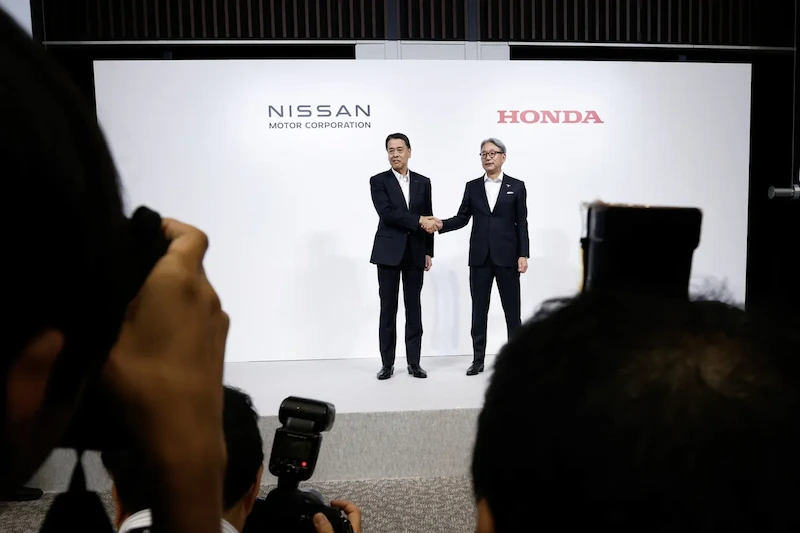


In a bold move that could reshape the Japanese auto industry, Honda Motor Co. and Nissan Motor Co. are reportedly in early discussions about a possible merger, with the potential to incorporate Mitsubishi Motors Corp. into the alliance. This strategic partnership aims to create a formidable competitor to Toyota Motor Corp. and bolster their position in the electric vehicle market, where they face increasing competition from Tesla Inc. and Chinese automakers.
The collaboration between Honda and Nissan comes after their recent collaboration on electric vehicle batteries and software, signaling a deeper level of cooperation between the two companies. The proposed merger would see the creation of a new holding company with shared equity stakes, providing the combined entity with the resources to invest in new technologies and compete more effectively on a global scale.
By joining forces, Honda, Nissan, and Mitsubishi hope to pool their resources and expertise to enhance their competitiveness in the rapidly evolving automotive industry. This move also reflects a shifting landscape in the industry, with automakers reassessing their partnerships and alliances to stay ahead in a rapidly changing market.
While both Honda and Nissan have not confirmed the reports of the merger talks, they have reaffirmed their commitment to exploring further cooperation. Shares of both companies surged in response to the news, reflecting investor optimism about the potential benefits of a merger.
The reported negotiations also highlight the challenges faced by automakers in an increasingly competitive market, where scale and technological capabilities are becoming critical factors for success. A potential alliance between Honda, Nissan, and Mitsubishi could not only strengthen their position in the market but also pave the way for future collaborations in areas such as autonomous driving technology and sustainable mobility solutions.
As the discussions progress, the automotive industry is poised for a potential realignment that could redefine the competitive landscape and shape the future of mobility. With Toyota's dominant position under threat, the proposed merger between Honda, Nissan, and Mitsubishi signals a new chapter in the evolution of the Japanese auto industry, with implications that reverberate across the global automotive landscape.