


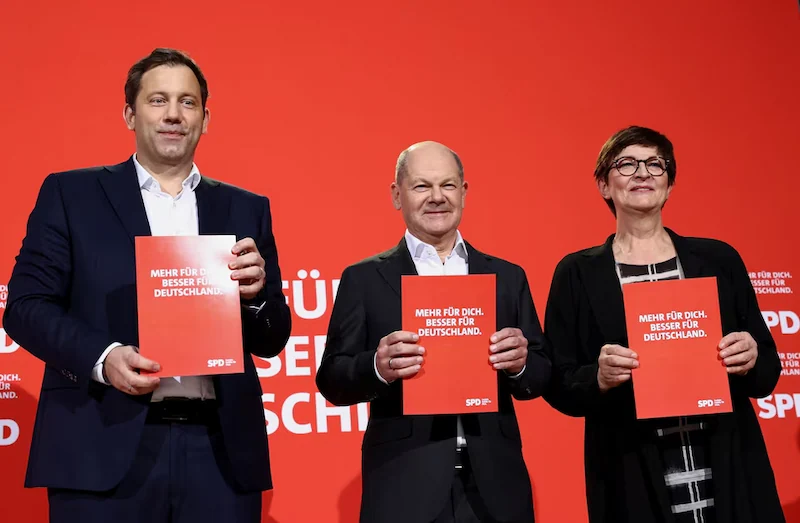


As Germany gears up for a snap election on Feb. 23, the country's main political parties have presented their contrasting visions for revitalizing Europe's largest economy. Following the collapse of Chancellor Olaf Scholz's coalition and a subsequent parliamentary vote of confidence, the stakes are high for a nation grappling with economic challenges and shifting political currents.
Friedrich Merz, leading the conservatives, aims to steer the country towards economic recovery with proposed cuts to income and corporation taxes as well as lower electricity prices. While critics question the feasibility of Merz's uncosted policies, the Christian Democratic Union (CDU) remains confident in financing them through projected economic growth and targeted welfare cuts.
On the other hand, Scholz's Social Democrats (SPD) and the Greens advocate for reforming the debt brake to facilitate infrastructural overhauls and private investments. Economy Minister Robert Habeck stresses the urgency of updating Germany's infrastructure and estimates a substantial financial commitment over the next decade.
Amid concerns over business confidence and economic stagnation, analysts warn that incremental measures may not be sufficient to spur significant change. Cyrus De La Rubia, Chief Economist at Hamburg Commercial Bank, emphasizes the need for bolder, more far-reaching strategies to address Germany's economic challenges effectively.
Beyond economic policies, issues such as migration and the conflict in Ukraine are poised to shape the election narrative. While Scholz prioritizes job protection and investment incentives, Merz advocates for equipping Ukraine with advanced weaponry, a move that could strain German-Russian relations. The Greens push for increased defense spending, while the far-right Alternative for Germany (AfD) advocates for a more conciliatory stance towards Moscow.
As the election campaign unfolds, Germany finds itself at a crossroads, facing critical decisions on its economic future and geopolitical positioning. The clash of competing ideologies and strategies underscores the complexity and depth of the challenges ahead for the nation's leadership and its citizens.