


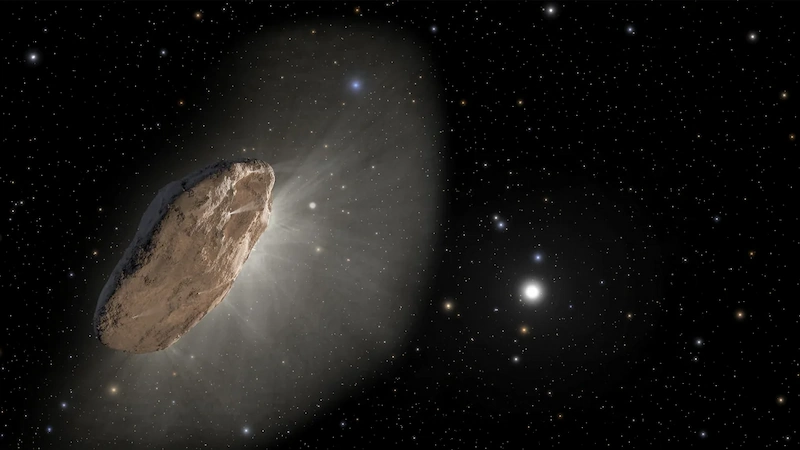


Astronomers have recently made a groundbreaking discovery of seven new dark comets within our solar system, shedding light on a mysterious cosmic phenomenon that blurs the line between asteroids and comets. These dark comets, initially spotted two decades ago but now doubled in number, exhibit behaviors akin to comets without the typical tails, raising questions about their composition and potential role in delivering vital elements like water to Earth.
The research, published in the journal Proceedings of the National Academy of Sciences, reveals that these celestial objects fall into two distinct populations based on their orbits and sizes. Inner dark comets, found within the inner solar system, may have originated from the main asteroid belt, while outer dark comets likely came from regions near Jupiter and beyond, displaying oval-shaped orbits spanning hundreds of meters.
The discovery of these dark comets has sparked new avenues of inquiry into their composition and origins. Researchers are eager to explore whether these objects contain ice, what drives their acceleration, and how they may have influenced the early evolution of Earth through impacts during its formation. Astronomers believe that understanding dark comets could provide crucial insights into the chaotic nature of the solar system and unveil the processes that played a role in shaping our planet.
Moreover, the presence of ice on these near-Earth dark comets could challenge existing theories, suggesting that they may have been significant contributors to delivering water to Earth. The 14 known dark comets within our solar system open windows of opportunity for gathering data to unravel the mysteries surrounding these enigmatic celestial bodies and their potential impact on Earth's history.
As researchers delve deeper into the origins and characteristics of dark comets, upcoming missions like the Japan Aerospace Exploration Agency's Hayabusa2 spacecraft rendezvous with comet 1998 KY26 in 2031 offer promise for unlocking more insights into these intriguing objects. With the revelation of dark comets as not so rare as once believed, the cosmic puzzle they present continues to captivate scientists, offering a glimpse into the cosmic processes that have shaped our solar system and influenced the development of life on Earth.