


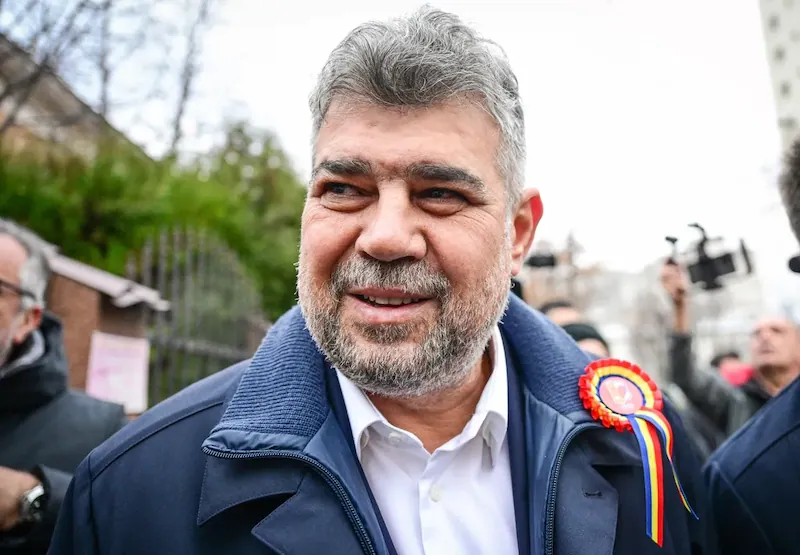


Romania’s political crisis took a sharp turn as the country’s largest pro-European party unexpectedly withdrew from coalition negotiations, plunging the nation into uncertainty and prompting a market sell-off. Social Democratic leader Marcel Ciolacu announced that his party would not be joining a potential minority government formed by the right-leaning Liberals, the opposition Save Romania Union, and the party representing ethnic Hungarians. This decision has left the formation of a new government in limbo and heightened concerns about Romania's ability to address its widening budget deficit.
President Klaus Iohannis called on all parties to resume negotiations, emphasizing that a minority government may not be the most effective solution. The Liberals have pledged to continue talks in an effort to form a stable government despite the setback.
The turmoil has also raised worries about a potential rise in support for far-right parties leading up to next year's presidential election rerun. The collapse of the pro-European coalition, aimed at preventing extremist groups from gaining power, has exposed deep divisions within mainstream parties and highlighted a lack of trust among Romanian citizens in political leadership.
The sudden political developments have rattled financial markets, with Romanian government bond yields spiking and the stock index experiencing significant losses. The country's precarious economic situation, compounded by a budget deficit expected to reach 8.6% of GDP this year, has raised concerns among investors and rating agencies.
Fitch Ratings recently downgraded Romania's credit outlook to negative, citing difficulties in addressing the budget deficit. The parties involved in coalition negotiations are at odds over the necessary austerity measures and reforms required to stabilize the economy, further complicating the path forward.
As President Iohannis prepares for further discussions with party leaders, the future of Romania’s government remains uncertain. The need for a stable parliamentary majority to address pressing economic challenges is paramount, with potential implications for the country’s EU integration and overall political stability.