


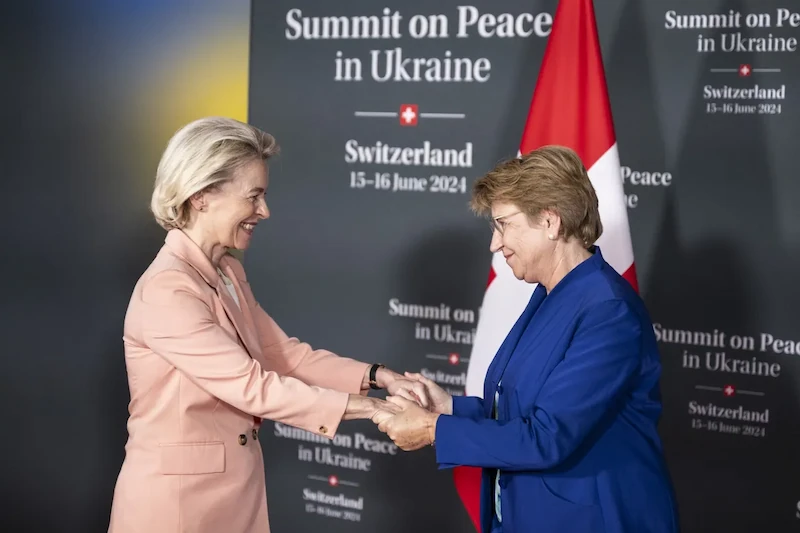


In a significant development, Switzerland and the European Union have reached a comprehensive agreement to secure Switzerland’s access to the EU’s single market. This breakthrough comes after a series of intense negotiations that saw both parties working towards a mutually beneficial deal, surpassing the informal deadline set for the end of the year.
The agreement marks a pivotal moment in the relationship between Switzerland and the EU, especially considering that Switzerland had previously walked away from similar negotiations over three years ago, causing tensions between the two sides. The absence of a treaty had raised concerns about the continuity of vital bilateral arrangements, particularly in trade.
One of the key challenges during the negotiations revolved around the issue of free movement of people, a sensitive topic for Switzerland amid domestic pressures on immigration. However, a compromise was reached, including a reworked safeguard clause that allows Switzerland to address any unforeseen impacts of free movement while respecting the EU's principles.
As part of the deal, Switzerland has disclosed the financial contributions it will make to the EU. Annual payments are set to amount to 350 million francs from 2030 to 2036, with a transitional contribution of 130 million francs per year until 2030. The agreement also covers various other aspects such as science funding, rail transport, and electricity cooperation.
European Commission President Ursula von der Leyen hailed the agreement as "historic," emphasizing the importance of stable relations between Switzerland and the EU. Further discussions will focus on finalizing the legal texts before seeking official approval.
The agreement is slated for discussion in the Swiss parliament by 2026, followed by a public vote. This is expected to spark a robust debate, given the contentious nature of the topics involved, including immigration concerns and sovereignty fears raised by certain politicians and interest groups.
In the event of Switzerland facing economic challenges due to free movement, mechanisms are in place for both sides to address the situation amicably, with the option of resorting to arbitration if necessary. With this deal, Switzerland and the EU move towards a more stable and predictable relationship, navigating the complexities of their economic interdependence through a comprehensive framework that serves both parties' interests.