


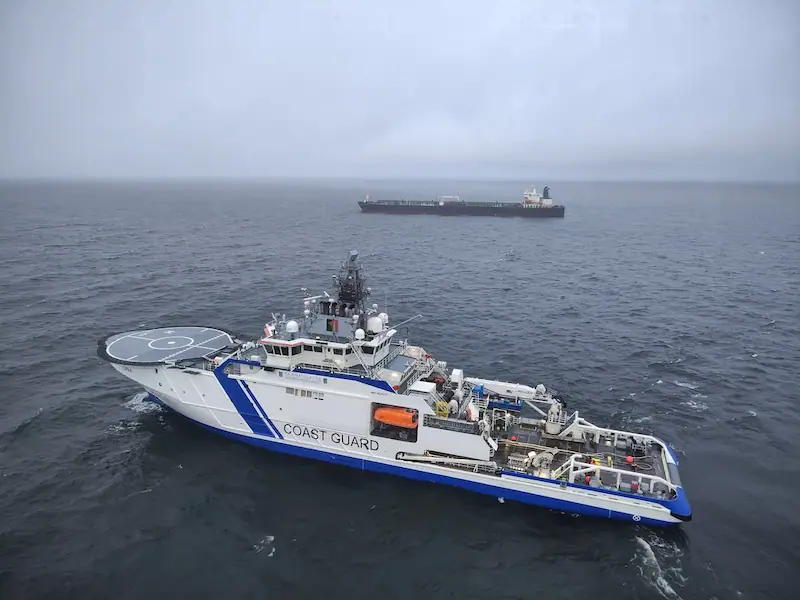


After a series of incidents involving undersea cables in the Baltic Sea, Estonia and Finland have taken swift military action to protect their critical infrastructure. The most recent event occurred when a Russian-owned oil tanker, the Eagle S, was seized by Finnish authorities on suspicion of damaging five cables with its anchor. This marks the third incident of its kind within a year, leading officials to believe foul play may be involved.
To safeguard the integrity of their electricity connections, Estonia deployed the Raju military vessel to patrol the EstLink 1 submarine power link, which plays a vital role in connecting the Baltic and Nordic energy systems. This proactive measure sends a strong message that the nations are prepared to defend their networks with military resources.
Finland has initiated an investigation into the damaged cables, with a border guard patrol vessel dispatched to survey the site. Meanwhile, authorities are examining the Eagle S and interviewing its crew to determine responsibility for the incident. Sweden's coastguard has also increased surveillance in the area to prevent further disruptions.
Amidst these developments, Estonian Prime Minister Kristen Michal has called for NATO's assistance in protecting undersea infrastructure in the region. NATO has pledged its support and is considering enhancing its military presence in the Baltic Sea to bolster security measures.
While the motive behind these cable disruptions remains unclear, recent events include the severing of a fiber optic cable connecting Finland and Germany, as well as damage to a link between Lithuania and Sweden, both potentially linked to external actors. Despite these challenges, officials reassure the public that the region's electricity supply remains stable.
As investigations continue, the focus remains on ensuring the security of critical infrastructure in the Baltic Sea. President Alexander Stubb emphasizes the importance of unity and vigilance to prevent outsider interference, emphasizing the need for continued collaboration to safeguard essential networks.