


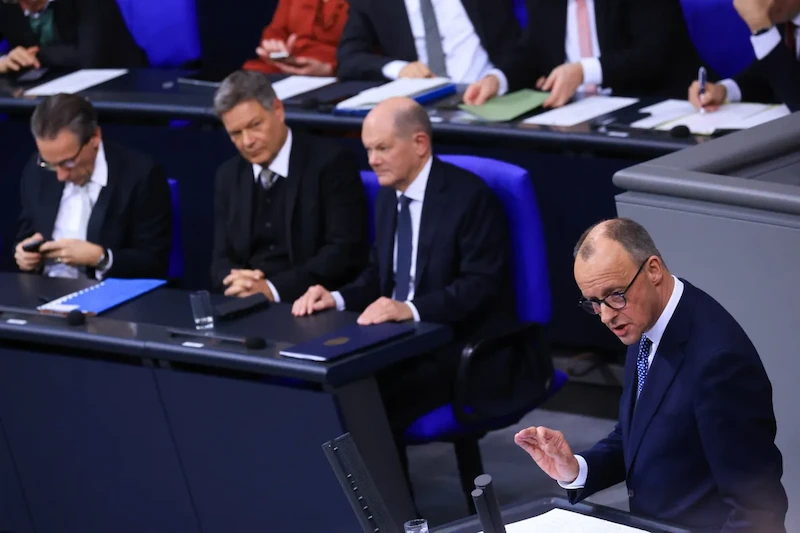


Germany is bracing for a snap election on February 23, following Chancellor Olaf Scholz's decision to dissolve parliament after a rift in his coalition government. President Frank-Walter Steinmeier endorsed the early election timetable, emphasizing the need for stability in the face of major challenges, including economic weaknesses, global conflicts, climate change, and migration issues.
As the campaign season kicks off, external influences on democracy have come under scrutiny, with the return of US President-elect Donald Trump and his adviser Elon Musk's involvement in German politics raising concerns. Steinmeier warned against undue influence on the electoral process, underscoring the importance of fair and transparent campaigning.
The latest polls show the opposition conservatives, led by Friedrich Merz, in a strong position with around 31% support, ahead of the far-right AfD and the struggling SPD and Greens. However, the SPD remains optimistic about narrowing the gap and emerging as the winner, as it did in the last election under Scholz's leadership.
Despite the rare occurrence of an early election in German politics, the current parliament will continue its work until the formation of the next government. With two parliamentary sessions planned before the election, the political landscape remains dynamic and unpredictable, adding to the excitement and uncertainty surrounding the upcoming national ballot.
As Germany enters a critical juncture in its political journey, all eyes are on the candidates, their platforms, and the choices voters will make in shaping the country's future trajectory.