


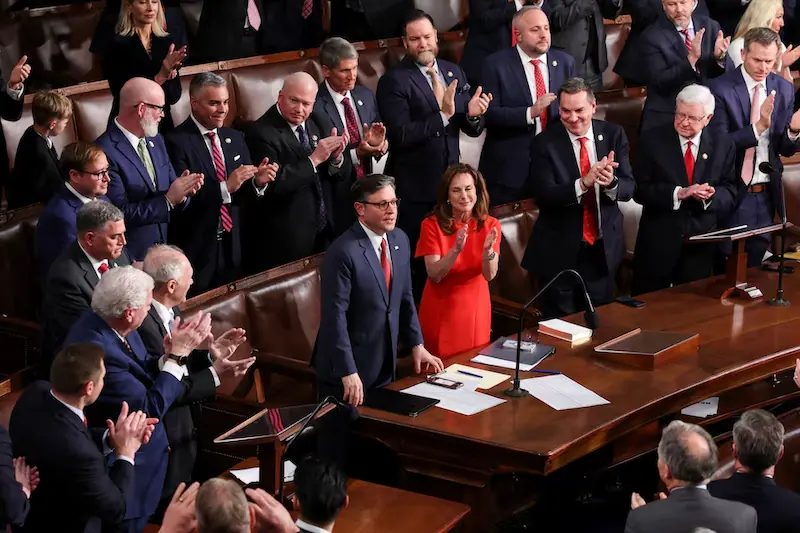


In a closely contested and tense vote on Friday, U.S. House of Representatives Speaker Mike Johnson managed to secure his position in the chamber's top job. With a razor-thin Republican majority of 219-215, Johnson faced a challenging reelection process that saw him initially fall short of the required majority during an hour-long roll-call vote.
In a dramatic turn of events, two Republican opponents eventually switched their votes to support Johnson after lengthy negotiations. Ultimately, Johnson secured his reelection with exactly 218 votes - the minimum needed to retain his role as Speaker.
This vote not only tested the party's cohesion as it navigates key legislative priorities like tax cuts and border enforcement but also served as an early indicator of Donald Trump's influence within the GOP. With internal divisions plaguing House Republicans over the past few years, Johnson's reelection marked a pivotal moment in the party's efforts to maintain unity and advance its agenda.
The Louisiana representative, a conservative Christian lawyer, was thrust into the national spotlight during the tumultuous events of October 2023 when he succeeded Kevin McCarthy as Speaker of the House. Despite his efforts to foster a close relationship with Trump, Johnson has faced challenges in keeping his party aligned on critical issues.
Trump's endorsement of Johnson ahead of the vote underscored the former president's role in influencing Republican leadership decisions. As Johnson prepares to lead the House through a period marked by significant legislative challenges, including addressing the nation's mounting debt and advancing Trump's policy objectives, his reelection signifies a critical win for the Republican Party.
Looking ahead, Johnson will be tasked with steering Congress through a complex political landscape, where bipartisan cooperation and strategic maneuvering will be essential. As the nation's debt ceiling looms and contentious policy debates await, Johnson's leadership will be tested in navigating the competing interests within his party and the broader political landscape.
Furthermore, with the Senate also undergoing a leadership transition, as Senator John Thune assumes the role of leader in the new Republican majority, the dynamics of Capitol Hill are poised for change. Johnson's ability to rally support and bridge ideological divides within the GOP will be crucial in shaping the legislative outcomes in the coming term.
As the nation braces for the transition of power in the White House and the challenges that lie ahead, Johnson's reelection sets the stage for a period of intense political maneuvering and policy debates in the halls of Congress. Only time will tell how effectively he can navigate the intricate web of political forces shaping the future of American governance.