


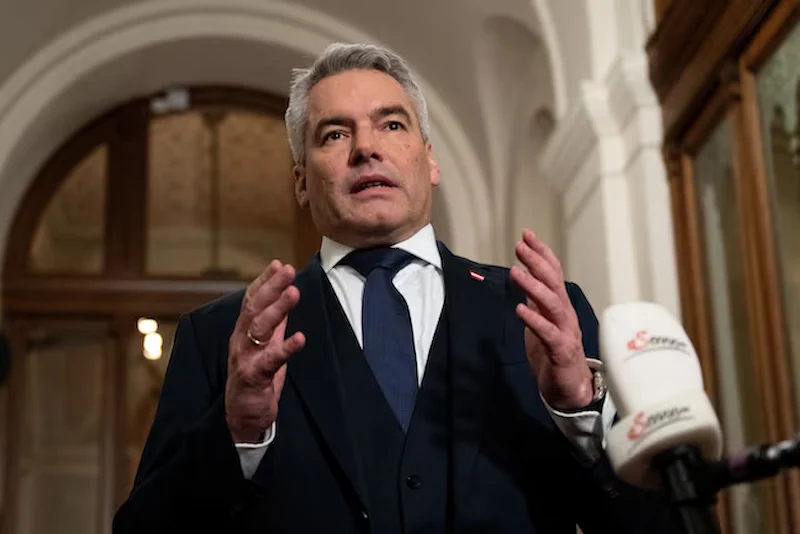


In a surprising turn of events, negotiations between Austria's two major centrist parties to form a coalition government have come to a halt. Chancellor Karl Nehammer announced on Saturday that he would be resigning in the coming days, following the breakdown of talks without the far-right Freedom Party (FPO) involved.
The impasse arose after the small liberal party Neos withdrew from the discussions, citing a lack of decisive action from the other parties. This decision threw the coalition-building process into disarray, leaving the parties unable to find common ground on crucial matters.
With Nehammer's impending resignation, the future of Austrian politics hangs in the balance. The eurosceptic and Russia-friendly FPO, which emerged victorious in the last election, finds itself in a position of strength. However, Nehammer's refusal to collaborate with FPO leader Herbert Kickl has left the party without a viable coalition partner.
As Austria grapples with this political uncertainty, the possibilities for the next steps are limited. Austrian President Alexander Van der Bellen may now be left with the challenging decision of tasking Kickl with forming a government or calling for a snap election to break the deadlock.
The resurgence of support for the FPO further complicates the political landscape, with the party maintaining a significant lead over the People's Party (OVP) and the Social Democrats (SPO) in recent opinion polls. SPO leader Andreas Babler expressed concern over the potential consequences, warning of the threat posed by a right-wing extremist chancellor in an FPO-OVP government to the country's democratic values.
As Austria faces a critical crossroads in its political journey, the impact of these developments on the nation's future remains uncertain. The failure of coalition talks and Nehammer's forthcoming departure mark a pivotal moment in Austrian politics, with far-reaching implications for the country's governance and stability.