


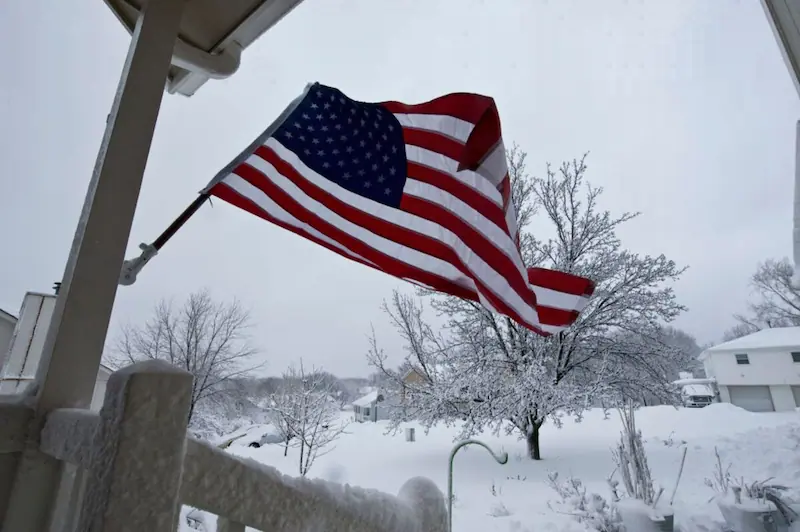


A fierce winter storm swept through the central United States on Sunday, unleashing a barrage of snow, ice, and howling winds that created treacherous travel conditions in several states. With the possibility of the "heaviest snowfall in a decade" looming over some areas, residents found themselves grappling with blizzard conditions and frigid temperatures.
Major roadways in Kansas, western Nebraska, and parts of Indiana were coated in snow and ice, prompting the activation of the state's National Guard to assist stranded motorists. The National Weather Service issued winter storm warnings for Kansas and Missouri, where significant snow accumulation was anticipated, particularly north of Interstate 70.
A staggering 63 million people found themselves under some form of winter weather advisory, watch, or warning, highlighting the widespread impact of the storm. The disruptive weather event was attributed to the polar vortex, a phenomenon that usually remains in the Arctic but occasionally slips south, bringing intense cold to regions like the U.S., Europe, and Asia.
In the midst of the chaos, Indiana State Police urged motorists to avoid travel as plows struggled to keep up with the relentless snowfall. Portions of interstate highways in Indiana were blanketed, making driving conditions extremely hazardous.
In neighboring states, such as Missouri and Arkansas, governors declared states of emergency as high snow totals and icy conditions prevailed. The storm also disrupted railway services, leading to numerous cancellations due to safety concerns.
As the storm progressed, it was set to move into the Ohio Valley and reach the Mid-Atlantic states, ushering in a hard freeze as far south as Florida. The National Weather Service cautioned that travel in affected states could be perilous, if not impossible.
The bone-chilling cold and plummeting temperatures were forecast to grip the eastern two-thirds of the country starting Monday, with some areas experiencing temperatures well below normal. Cities like Chicago and Minneapolis were already feeling the bite of the cold, with frigid temperatures and dangerous wind chills.
In anticipation of the extreme weather, school closings were expected to be widespread on Monday, with districts across multiple states announcing closures and delays. The impact of the storm extended beyond transportation disruptions, affecting everyday activities and prompting state of emergency declarations in several regions.
As the eastern half of the country braced for the cold blast, residents were urged to take precautions and stay safe amid the wintry conditions. The storm served as a stark reminder of winter's might, showcasing the power and unpredictability of nature's forces.