


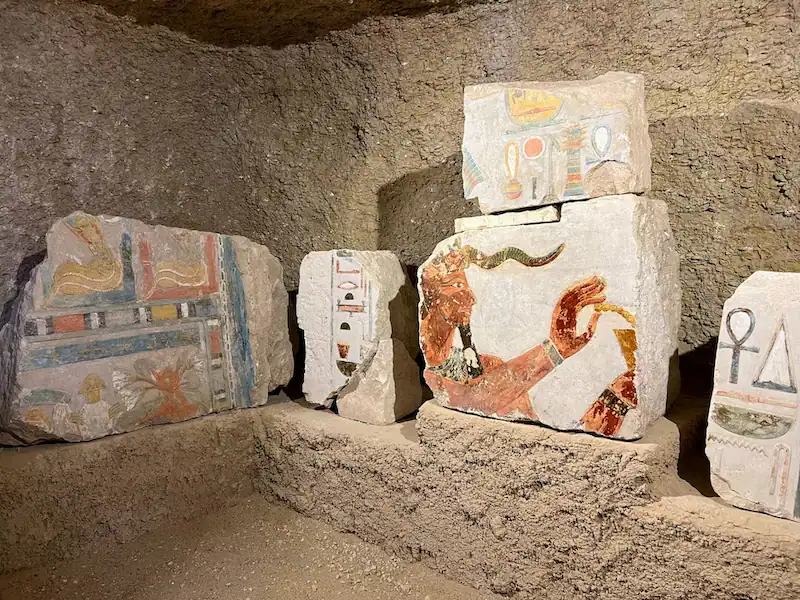


In a momentous archaeological breakthrough, the remnants of the foundation wall of Queen Hatshepsut's valley temple have resurfaced in Luxor, along with the tomb of Queen Teti Sheri, an enigmatic figure from Egypt's illustrious New Kingdom era. Led by the esteemed Zahi Hawass, a prominent Egyptian archaeologist and former minister of antiquities, the excavation team has unearthed over 1,000 intricately adorned stone blocks near the ruins of Hatshepsut's grand funerary sanctuary.
Queen Hatshepsut, a remarkable ruler belonging to the 18th dynasty, left an indelible mark on Egyptian history before her temple faced deliberate destruction in the annals of time. Revered for her exceptional reign, the recovered stone blocks reveal vivid depictions of life in ancient Egypt, capturing the essence of a bygone era with unparalleled beauty and detail. Among these treasures, a limestone tablet bearing the name of Hatshepsut's ingenious architect, Senmut, sheds light on the temple's construction process, offering a glimpse into the craftsmanship of a bygone era.
Adjacent to the resplendent remnants of Hatshepsut's legacy lies the modest yet poignant tomb of Queen Teti Sheri, Ahmose I's beloved grandmother. A crucial figure preceding the golden age of the New Kingdom, Queen Teti Sheri's burial site showcases a simple yet evocative design, carved into solid rock and adorned with meticulous red wall illustrations. Her legacy intertwined with the rise of Ahmose I, the pharaoh who emancipated Egypt from the oppressive reign of the Hyksos invaders, further enriches the historical tapestry painted by these recent discoveries.
As the sands of time continue to yield fragments of Egypt's illustrious past, each find contributes to the vibrant mosaic of this ancient civilization, offering a portal into the lives and accomplishments of iconic figures such as Queen Hatshepsut and Queen Teti Sheri. Through the dedication of modern-day explorers like Zahi Hawass, the legacy of these formidable women is resurrected, casting a timeless spotlight on their enduring influence in the annals of history.