


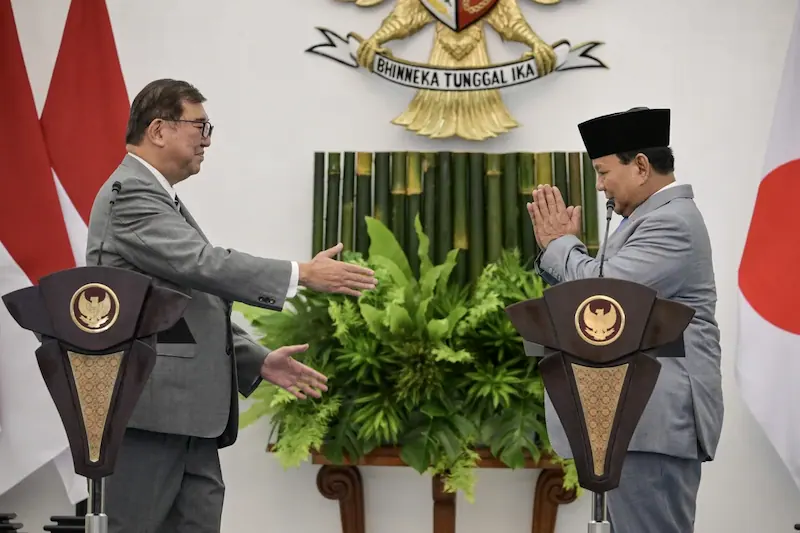


In a significant move to deepen bilateral cooperation, leaders from Japan and Indonesia have reaffirmed their commitment to enhancing collaboration in key areas such as defense, energy, and food security. Prime Minister Shigeru Ishiba's visit to Indonesia marks a crucial step in bolstering ties between the two nations, with a particular focus on fostering renewable energy initiatives and advancing defense partnerships, including measures for maritime security and technology transfer.
During their meeting, President Prabowo Subianto highlighted Indonesia's priorities, including initiatives like the free school lunch program and efforts to maximize the benefits of natural resources through downstreaming. Japan, on its part, expressed readiness to support these endeavors and announced plans to provide Indonesia with a patrol vessel through a grant from the Japan International Cooperation Agency.
This display of solidarity comes at a time when Japan is actively seeking to elevate its presence in Southeast Asia, strategically positioning itself as a counterbalance to China's expanding influence in the region. The visit by Prime Minister Ishiba follows engagements with neighboring Malaysia, where discussions centered on renewable energy cooperation and regional security challenges such as those in the South China Sea.
Looking ahead, Japan is set to engage with other key players in the region, with scheduled talks lined up with Philippine President Ferdinand Marcos Jr. and US President Joe Biden. These diplomatic efforts underscore Japan's commitment to deepening ties with Southeast Asian nations and reinforcing its role as a key partner in promoting stability and prosperity in the region.
The evolving dynamics in the Asia-Pacific region highlight the fierce competition between Japan and China for influence in Southeast Asia, a dynamic market characterized by significant trade volumes and a substantial consumer base. As both nations vie for strategic partnerships and economic opportunities, the outcome of this geopolitical contest is poised to shape the regional landscape and define the trajectory of cooperation and rivalry in the years to come.