


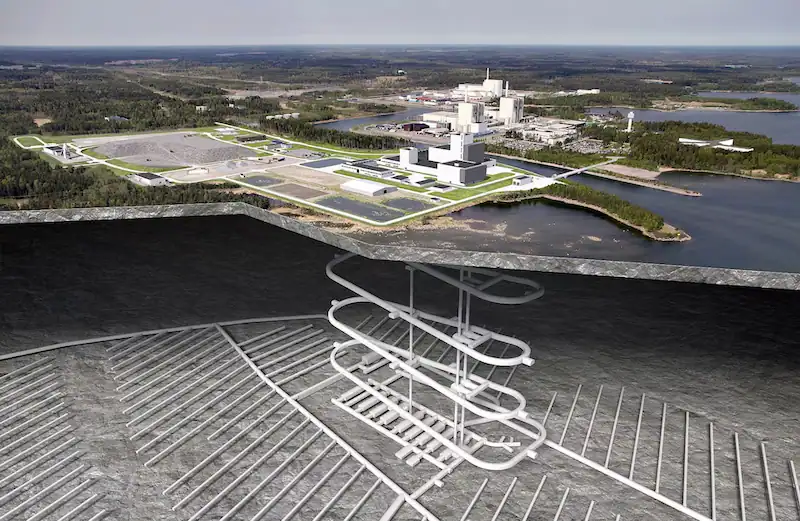


In a groundbreaking move, Sweden has embarked on the construction of a final storage facility for highly radioactive spent nuclear fuel - only the second of its kind globally. This significant development comes as the nuclear industry grapples with the challenge of safely storing deadly radioactive waste for millennia, dating back to the inception of commercial reactors in the 1950s.
The construction of the final repository, located at Forsmark about 150 kilometers north of Stockholm, marks a crucial step towards addressing the long-standing issue of nuclear waste management. Environment Minister Romina Pourmokhtari hailed the initiative as pivotal for Sweden's climate transition, emphasizing the project's importance in ensuring the safe disposal of hazardous materials.
While Finland is nearing the completion of a similar permanent storage site, Sweden's facility will span 60 kilometers of tunnels buried 500 meters deep in 1.9 billion-year-old bedrock. Encased in 5-meter-long corrosion-resistant copper capsules and entombed in clay, the repository is designed to house 12,000 tons of spent nuclear fuel.
Despite the ambitious scope of the project, concerns over safety continue to loom large. An appeal filed by the Swedish non-governmental organization, MKG, has called for additional safety assessments, citing potential risks of corrosion and leakage of radioactive elements into groundwater. Notably, the necessity of ensuring the repository's durability for the next 100,000 years remains a critical focal point.
With a projected completion timeline extending to around 2080, the Forsmark repository is estimated to cost approximately 12 billion crowns, funded by the nuclear industry. While the facility is designed to accommodate all waste generated by Sweden's existing nuclear power plants, the exclusion of fuel from future reactors poses a challenge as the country looks to expand its nuclear energy capacity with plans for 10 additional reactors by 2045.
As Sweden forges ahead with the construction of its final storage facility for spent nuclear fuel, the journey towards establishing a sustainable and secure solution for radioactive waste disposal continues to unfold, underscoring the intricate balance between energy production, environmental stewardship, and long-term safety considerations.