


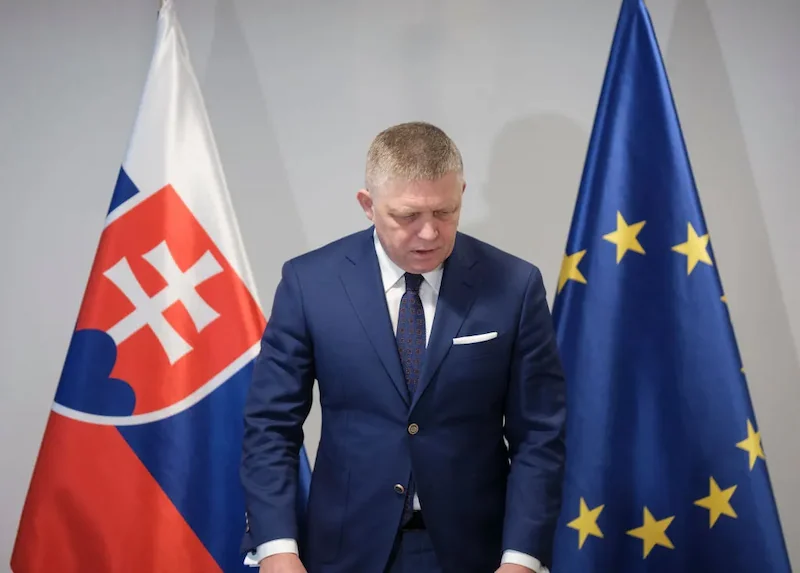


Slovakia's Prime Minister, Robert Fico, has sparked discussions about the country's future in the European Union and NATO, suggesting that rapidly changing global dynamics could potentially render these alliances obsolete. While Fico stopped short of advocating for a complete exit from these key institutions, his acknowledgment of the possibility has ignited debate in Slovakia.
The prime minister's remarks were prompted by a statement from Deputy Speaker Tibor Gaspar, who hinted at the idea of Slovakia reconsidering its membership in light of evolving circumstances within the EU and NATO. Fico acknowledged the shifting landscape, drawing parallels to the swift dissolution of the Warsaw Pact, and emphasized the importance of being vigilant about potential risks.
Since returning to power in 2023, Fico's government has sought to strengthen ties with various global powers, including Russia, while maintaining Slovakia's membership in the EU and NATO. However, recent developments, such as Fico's meeting with Russian President Vladimir Putin and growing tensions with Ukraine over gas supplies, have raised concerns among Slovakia's political establishment.
While Fico's stance on forging closer relations with Russia has raised eyebrows, it has also sparked backlash from within Slovakia. Criticisms have been leveled at the prime minister, with concerns raised about the economic risks of veering away from EU partnerships. The automotive industry, a key sector in Slovakia, has warned about jeopardizing the country's economic future.
Protests against Fico's stance have gained momentum, with public demonstrations advocating for Slovakia's continued alignment with the EU. The premier's party has faced a decline in popularity, with surveys showing support for pro-EU factions on the rise. Additionally, a group of mental health professionals has raised concerns about Fico's leadership style, calling for self-reflection and a reconsideration of political strategies.
In response to the criticism, Fico has accused his detractors of political bias and dismissed calls to step away from high-level politics. Despite facing a vote of no confidence in parliament, the prime minister is expected to survive the challenge. However, the debates surrounding Slovakia's future in the EU and NATO are likely to continue, reflecting the complexities and uncertainties of the country's geopolitical landscape.