


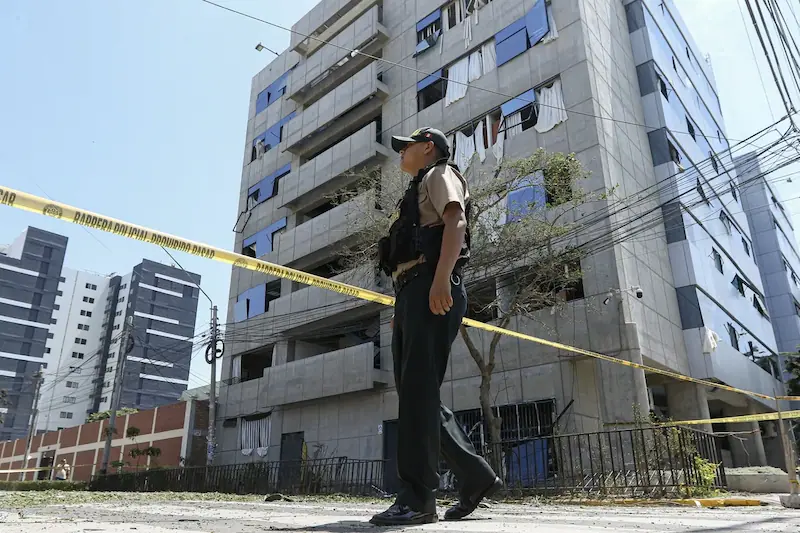


Peru is currently grappling with a severe public safety crisis, with government officials attributing the surge in chaos and violence to transnational criminal organizations. Interior Minister Juan Jose Santivanez emphasized the unprecedented nature of the crime wave, highlighting its transnational and organized nature that is affecting not only Peru but the entire region.
President Dina Boluarte also acknowledged the presence of organized, transnational crime during her presentation at the World Economic Forum in Davos. She characterized the issue as a global challenge rather than one specific to Peru. This focus on transnational crime is in line with efforts by US President Donald Trump to combat gangs and drug cartels, particularly highlighting the Venezuelan-born gang Tren de Aragua.
Peru's acknowledgment of the severity of the situation represents a significant shift from previous statements by the government, which had downplayed crime levels. This change comes in the wake of a recent dynamite attack on a prosecutors building in Trujillo, a city already under a state of emergency due to high levels of criminal activity.
Despite months of warnings and protests from various sectors of Peruvian society, including bus drivers, shop owners, and textile workers, about the rise in extortion rackets, President Boluarte's low approval rating and perceived inaction have fueled criticism. Critics, including Peru's top prosecutor, have accused her of undermining the state's ability to address crime by vetoing legislation aimed at streamlining the detention of criminal suspects.
The current state of public safety in Peru underscores the urgent need for comprehensive and effective measures to combat transnational crime and restore security and stability in the country and the region as a whole.