


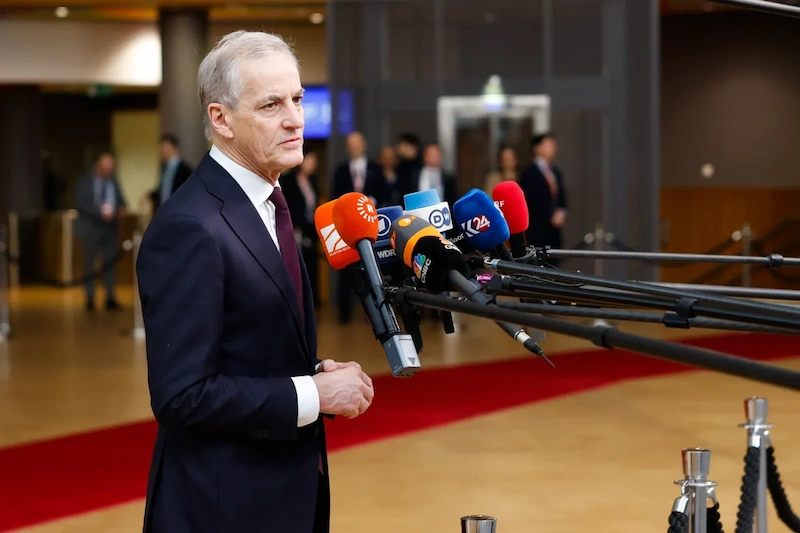


Norway's Prime Minister, Jonas Gahr Store, finds himself navigating turbulent political waters as he strives to mend fences with his coalition partner, the Center Party, in order to stave off a looming political crisis just seven months before the country's next parliamentary elections.
At a press conference held on Friday, Store emphasized the crucial and positive working relationship between his Labor Party and the Center Party, highlighting the need to prevent a potential fracture that could see the Center Party exiting the two-party cabinet. The main point of contention between the political allies revolves around the adoption of the European Union's energy market regulations.
The possibility of the Center Party departing the coalition looms large, with a decisive leadership board meeting scheduled for Monday. If the Center Party were to exit, the Labor Party would find itself governing alone until the September 8th elections, as Norway does not conduct snap elections.
Despite their collaboration over the past 3 1/2 years, Store acknowledged the public rift and expressed confidence in the parties' ability to find mutual understanding and reach a resolution. The Labor Party's proposal to enact certain sections of the EU regulations in question was met with opposition from the Center Party, further complicating the situation.
Norway, while not a member of the EU, maintains access to the single market through the European Economic Area agreement. The government's reliance on support from the Socialist Left party, which is not officially part of the coalition, has compounded the challenges facing Store's administration in extending its tenure amidst a backdrop of dwindling popularity, ethical scandals, tax controversies, and economic hardships.
Nevertheless, Store remains optimistic, stating, "This government is accustomed to navigating challenges and seeking solutions. In times of adversity, we persevere and dedicate extra effort to finding common ground." As the political landscape in Norway undergoes shifts and tensions run high, the upcoming months leading to the elections are poised to test the resilience and cohesion of the existing coalition.