


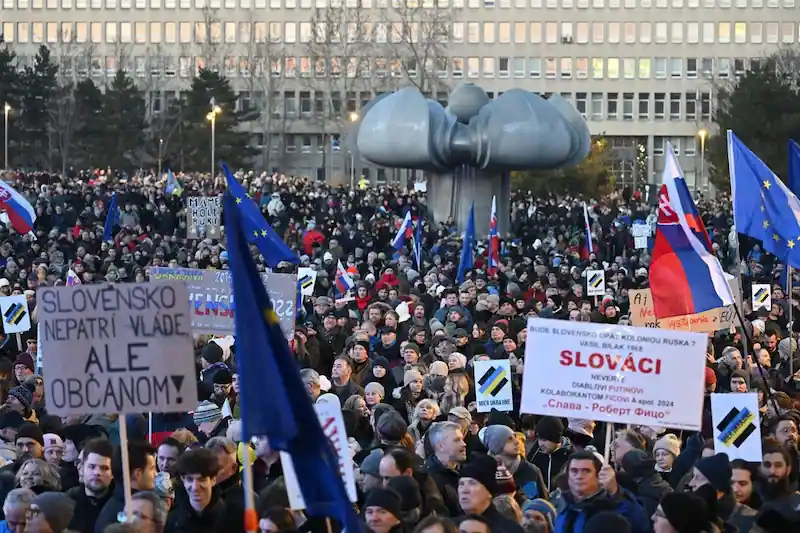


Slovakia's Prime Minister, Robert Fico, is navigating through a turbulent period as his government grapples with the threat of losing its parliamentary majority. The situation intensified when four lawmakers within the ruling coalition refused to participate in voting until their demands were met, leaving the government with insufficient votes to effectively govern.
Internal discord within the coalition, particularly within the Voice party, has added fuel to the fire, with the rebellious lawmakers expressing dissatisfaction with the party's direction. Their demands for a prompt resolution were communicated through a joint statement on social media, putting pressure on Fico to address the issue promptly.
Fico's administration, which marked a return to power in 2023, has been characterized by a significant policy shift towards fostering closer ties with Russia, a stance that has strained relationships with traditional European allies. In the face of mounting protests and calls for his resignation, Fico has stood firm, signaling that the fate of the coalition will be decided in the upcoming parliamentary session.
While acknowledging the potential for early elections if the coalition loses its majority, Fico has expressed reservations about such a scenario, emphasizing that it is not the optimal solution. The main opposition party, Progressive Slovakia, has seized on the opportunity, declaring the current situation as the unraveling of Fico's government and advocating for early elections as the only viable path forward.
Despite the escalating tensions and uncertainties surrounding the government's future, Fico has reiterated his commitment to Slovakia's membership in the European Union and NATO, dismissing the protests as orchestrated attempts to destabilize his leadership. As Slovakia finds itself at a crossroads, navigating political turmoil and internal dissent, the upcoming period promises to be a critical juncture in the country's democratic landscape.