


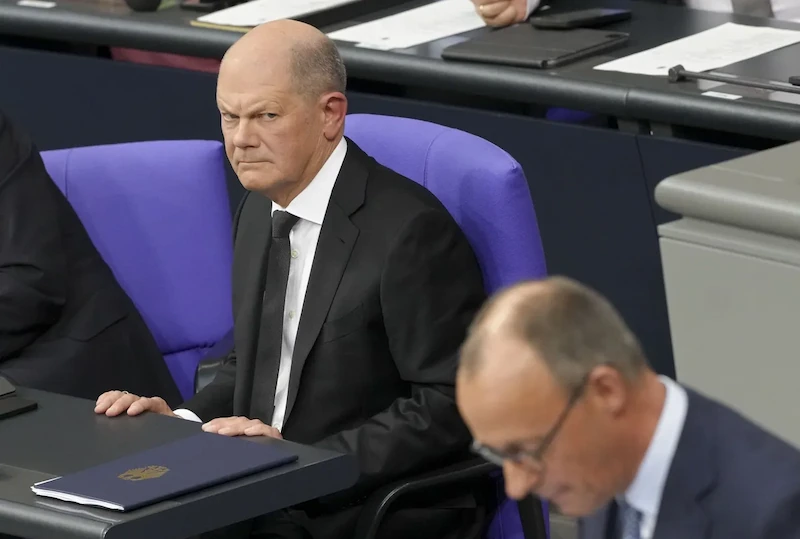


In a momentous turn of events, Germany's parliament has made a significant decision by approving a resolution urging Chancellor Olaf Scholz's minority government to implement a stringent migration policy reform. Although non-binding, this resolution carries weight as it marks the first instance where the far-right Alternative for Germany has cooperated with mainstream parties to secure a majority in the parliament.
Prior to the vote, Chancellor Scholz delivered a scathing critique against the conservative frontrunner Friedrich Merz, accusing him of veering towards populism and aligning with extremist factions through his tough stance on immigration. Scholz vehemently opposed the immigration legislation proposed by Merz, labeling it as a breach of European law and damaging to Germany's global standing and the European Union's integrity.
The upcoming snap election slated for February 23 has intensified the political landscape, with Merz and his CDU/CSU alliance advocating for a more assertive approach towards combatting irregular migration. The recent fatal knife attack in Aschaffenburg, carried out by an Afghan man whose asylum request had been denied, has fueled the conservatives' push for stricter immigration policies, underscoring flaws in the country's security and asylum systems.
Merz's CDU/CSU bloc intends to introduce a bill in the Bundestag aimed at addressing irregular migration, despite facing significant challenges in garnering cross-party support. While Merz has expressed openness to receiving backing from the AfD, he has clarified that active cooperation with the far-right party is off the table due to their extremist ideologies.
Amid escalating tensions, the latest YouGov poll reflects a rise in support for the CDU/CSU, positioning them at 29%, with the AfD trailing closely behind at 23%. Scholz's SPD party has experienced a dip in popularity, standing at 15%, while the Greens have also faced a decrease in support.
Additionally, the Social Democrats are set to launch renewed efforts to secure approval for enhanced security measures, including bolstered police powers to manage migration influxes. With Germany adapting to the changing dynamics following the reintroduction of entry checks at all borders, the government aims to navigate the complex terrain of migration policy amidst evolving challenges, including the aftermath of the conflict in Ukraine.