




Germany's highly anticipated economic revival has once again been postponed, as the government significantly revised its projections for this year in light of trade disputes and mounting domestic apprehension over the imminent election. The annual government report disclosed on Wednesday disclosed a bleak outlook, forecasting a mere 0.3% economic growth for the year, a sharp reduction from the previously anticipated 1.1%. This downgraded prognosis illustrates a persistent stagnation in an economy that still holds the title as Europe's largest, failing to show signs of rebound after enduring two consecutive years of contraction.
The economic stalemate has been exacerbated by the breakdown of the government back in November, precipitating snap elections scheduled for February 23. Economy Minister Robert Habeck expressed the grim reality, stating, "Germany is stuck in stagnation" and emphasized that the long-awaited growth has been postponed once more this year. The government now anticipates a recovery in 2026 with a growth rate of 1.1%.
Habeck pinpointed three primary factors contributing to the substantial reduction in the government's forecasts for 2025: the failure to enact a growth initiative following the coalition's collapse, the uncertainty surrounding the forthcoming election, and geopolitical risks linked to the potential re-election of U.S. President Donald Trump. The opposition conservatives, specifically CDU's Jens Spahn, chastised Habeck for becoming the embodiment of the economic crisis, labeling even the modest growth estimate as overly optimistic. Spahn highlighted the looming threat of a third consecutive year of recession diverging from the growth observed in other industrialized nations.
The leading associations of the German economy echoed similar sentiments, criticizing the government for its misjudgment of the situation and its delay in implementing vital reforms. Amidst these developments, protests erupted with hundreds of family business representatives clamoring for reduced bureaucracy, lower energy costs, an influx of skilled workers, and diminished taxes to alleviate the strains imposed on businesses.
Habeck attributed the economic turmoil to underinvestment, emphasizing that Germany's fiscal policy has been more stringent compared to other G7 nations, hindering growth prospects. He called for a revamp of the debt brake, an initiative restricting public borrowing to 0.35% of GDP. Notably, inflation is projected at 2.2% for 2025, predicted to dip below the European Central Bank's 2% target in 2026, while unemployment is expected to rise to 6.3% from the previous year's 6.0%.
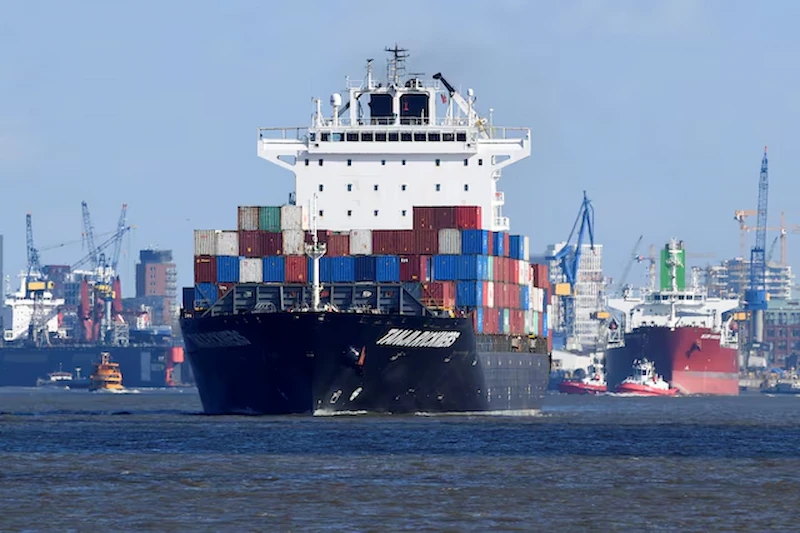
Compounding the economic woes, German exports are anticipated to plummet by 0.3% in 2025 due to diminishing competitiveness along with escalating geopolitical and trade tensions as outlined in the government's report. The potential repercussions of Trump's return to office, coupled with his tariff threats, could lead to a contraction of the export-oriented German economy by nearly 0.5% in the same year, warned the BDI industry association. Habeck underscored the imperative need to steer clear of tariffs, cautioning that they impede investment and hike up prices, posing a threat to Germany's exports and the broader economy.
The government's report underscored the necessity for the EU Commission to expedite progress in securing additional trade agreements to bolster trade relationships, particularly with the U.S. The emphasis on maintaining and expanding trade relations highlights the critical role that international trade plays in Germany's economic recuperation.