


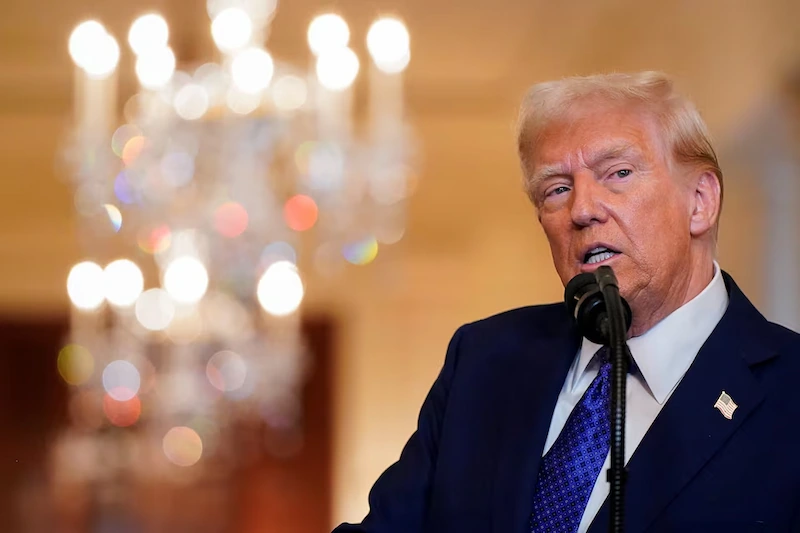


In a bold and unexpected move, U.S. President Donald Trump announced on Friday that he will be implementing tariffs of 25% on Canadian and Mexican imports and 10% on Chinese goods with immediate effect. White House spokesperson Karoline Leavitt cited the reason for these tariffs as the illegal fentanyl that these countries have sourced and allowed to distribute into the United States, resulting in the deaths of tens of millions of Americans.
Contrary to earlier reports suggesting a delay in collecting the duties until March 1, Leavitt clarified that the tariffs would come into effect immediately. The news sent shockwaves through financial markets, causing fluctuations in the dollar, Mexican peso, and Canadian dollar values. Additionally, Treasury bond yields rose while stocks reversed course to move lower on the day.
The decision on tariffs is being closely managed by the White House, with discussions ongoing about potential exemptions. While details on exemptions remain vague, sources indicate that any exemptions granted would be minimal. This strategic move provides a window of 28 days before implementation, allowing for negotiations with Canada and Mexico to meet Trump's demands regarding illegal immigration and the trafficking of fentanyl.
Despite concerns about the impact on the North American trade system and the potential disruption of $1.6 trillion in trade, Trump stands firm on his decision to levy these tariffs. The looming threat of retaliatory measures from Canada and Mexico adds further uncertainty to the already volatile trade environment.
The administration is considering utilizing the International Emergency Economic Powers Act (IEEPA) to enforce the tariffs, declaring a national emergency over the fentanyl crisis and illegal immigration. This move would grant Trump broad powers to impose economic sanctions swiftly, without the need for lengthy investigations.
As tensions rise, Canadian Prime Minister Justin Trudeau has vowed to respond with countermeasures if Trump proceeds with the tariffs. Mexico remains cautious yet prepared to retaliate if necessary. Meanwhile, China has expressed hope that the U.S. will consider its cooperation in curbing fentanyl trafficking before making any drastic decisions.
The ramifications of these tariffs extend beyond trade disputes, impacting consumers and businesses on both sides of the border. The uncertainty surrounding exemptions and potential retaliation underscores the complexity of the situation, with global trade dynamics at stake.