


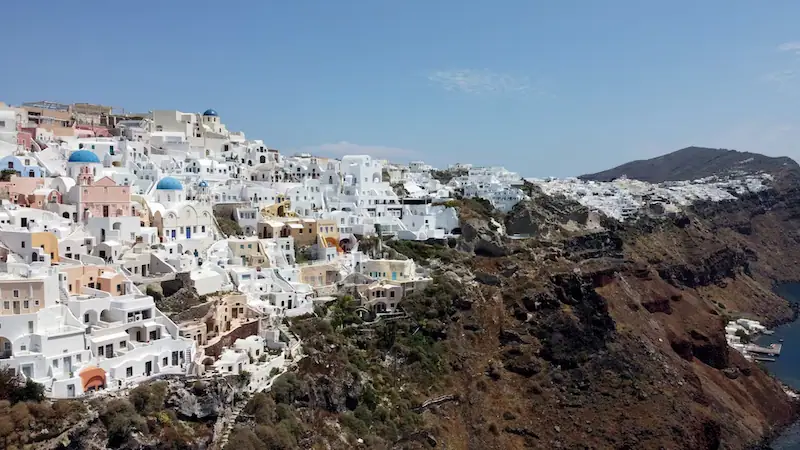


Greek authorities have raised concerns over a surge in seismic movement around the picturesque Aegean island of Santorini, prompting a series of precautionary measures to ensure public safety. Following the registration of more than 200 tremors between Santorini and Amorgos since Friday, experts have been closely monitoring the situation to assess the potential earthquake risks in the region.
Although the tremors have been deemed unrelated to volcanic activity, the civil protection ministry has advised residents and visitors on Santorini to avoid specific ports, empty pools, avoid crowded indoor spaces, and close schools temporarily. The precautionary measures have been extended to neighboring islands, including Amorgos, Ios, and Anafi.
Prime Minister Kyriakos Mitsotakis chaired an emergency meeting in Athens to address the situation, while local authorities on Santorini made preparations for a possible evacuation. Tents were erected in outdoor stadiums, police and fire brigade were put on high alert, and special disaster response units were placed on standby.
Professor Costas Papazachos, a seasoned expert in geophysics and seismology, emphasized that the measures taken are purely preventive, with the worst-case scenario being an earthquake measuring 6.0 or higher. Despite the uncertainty, Papazachos stressed the importance of readiness and preparedness.
Santorini, renowned for its iconic whitewashed buildings perched along rugged cliffs and distinctive black-sand beaches, attracts around 3 million visitors annually. The island's unique geological history, shaped by a colossal volcanic eruption around 1600 BC, underscores the need for caution and vigilance in the face of potential seismic risks.
While the last eruption in the area dates back to 1950, the current focus remains on ensuring the safety of residents and tourists amidst the heightened seismic activity in the region.