


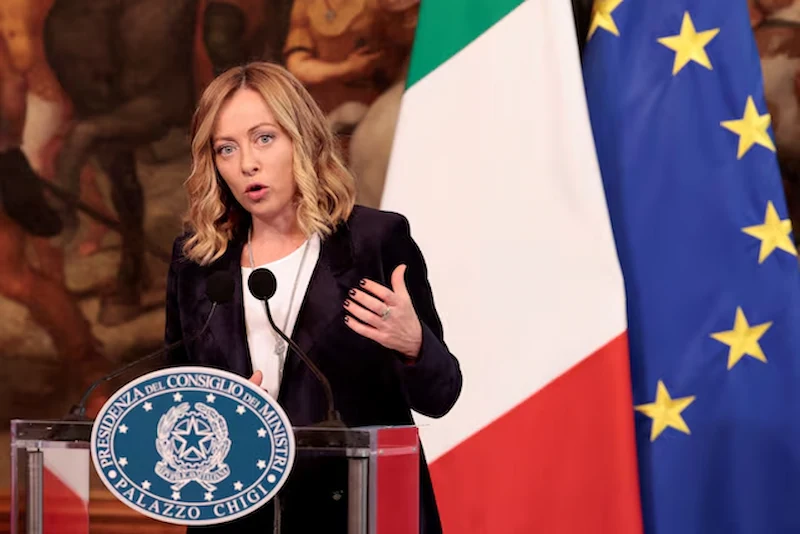


Despite promises from Prime Minister Giorgia Meloni's right-wing coalition to reduce taxes and social contributions, Italy is expected to maintain its tax burden at 42.3% of GDP through 2027, according to a recent Treasury document. This stability comes as a surprise, considering the government's commitment to easing the financial burden on individuals and businesses to boost the economy.
The document, outlining fiscal policy targets for 2025-2027, projects the tax burden to rise to 42.3% of GDP in 2024, up from 41.5% in 2023 and 41.7% in 2022. Despite calls for tax cuts, the Treasury emphasized that there are no plans to reduce the overall tax burden in the near future.
Opposition lawmaker Luigi Marattin criticized the ruling coalition for failing to deliver on its promise of tax cuts, noting that the government is set to end its term with a higher tax burden than when it began. This revelation has sparked concerns among taxpayers and businesses alike, especially as Italy already ranks among the top countries in terms of tax rates.
The distribution of the tax burden in Italy has long been a point of contention, with lower and middle-income earners bearing a disproportionate share of taxes and social contributions compared to the wealthy. Despite efforts to ease the burden on the middle class, funding constraints have hindered the implementation of targeted tax relief measures.
With Italy aiming to reduce its budget deficit and adhere to EU fiscal regulations, the government's ability to implement substantial tax cuts remains limited. In lieu of broad tax reductions, the Treasury plans to focus on establishing "preventive tax agreements" with foreign multinational companies to attract investment and provide stability in tax relations.
These agreements, which involve mutual agreements on tax calculations to mitigate legal risks, are part of Italy's strategy to foster a favorable business environment while navigating the challenges of balancing tax revenue and economic growth. As Italy continues to grapple with its fiscal priorities, the debate over tax reform and relief measures is likely to persist as a key issue in the political landscape.