


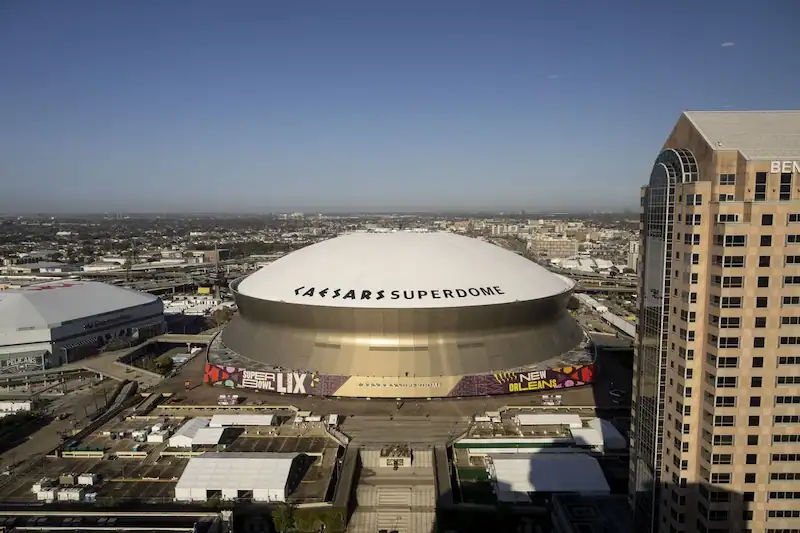


In the wake of the tragic New Year’s Day terrorist attack in New Orleans, federal law enforcement agencies are implementing one of the most extensive security operations in recent Super Bowl history. With Super Bowl LIX fast approaching and an estimated 125,000 visitors expected to flood the city, authorities are leaving no stone unturned to ensure the safety of residents and tourists alike.
The Secret Service is gearing up for the possibility of President Donald Trump attending the game, alongside the extensive coordination efforts between local, state, and federal agencies both on land, water, and in the air. Streets in New Orleans are already packed with officers armed with assault rifles, roadblocks strategically placed to regulate traffic, and police presence visible at every turn.
One of the key security measures includes the use of a high-tech Vehicle and Cargo Inspection System at the Superdome perimeter by US Customs and Border Protection to screen for potential threats. Additionally, drones, armed tactical units, and bomb-sniffing dogs will be deployed across the city, while the US Coast Guard will patrol the Mississippi River, and Customs and Border Protection will monitor maritime traffic.
Less visible elements of the security plan include plainclothes assets moving around undetected, enhancing the overall security net. Lessons learned from the January 1 attack have prompted officials to fine-tune and bolster existing security protocols to ensure a seamless and safe Super Bowl experience for all attendees.
The attack, deemed an act of terrorism by authorities, was carried out by a former US Army soldier who professed support for the Islamic State. Despite the tragic event, officials are steadfast in their efforts to maintain New Orleans' reputation as the "Big Easy" while concurrently prioritizing the security of the city during the prestigious sports event.
Eric DeLaune, the special agent in charge of Homeland Security Investigations in New Orleans, emphasized the importance of reassuring the public about their safety. "The beauty of New Orleans is that laissez-faire attitude, where people can just relax and enjoy the culture and history," said DeLaune. "But what we're seeing here now is that there are concerns about safety, and we want them to know that we are invested in that safety."