


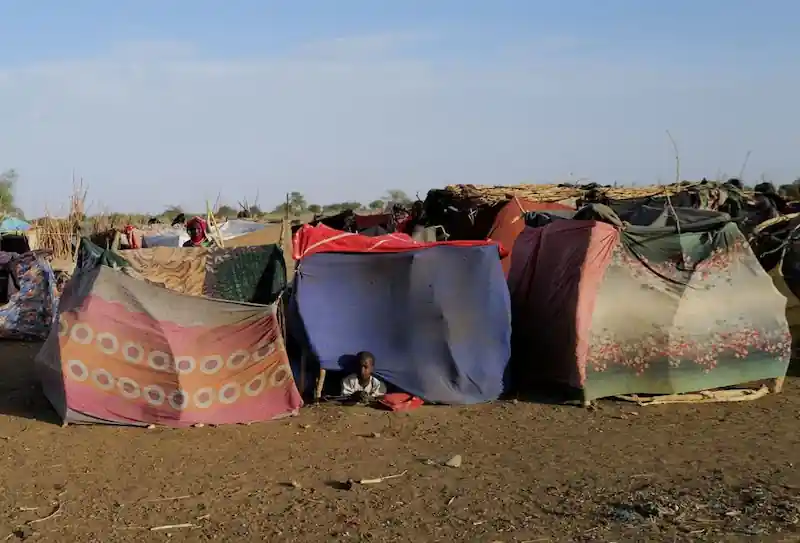


Sudanese citizens are hopeful that the talks between envoys of warring factions in Jeddah will result in an end to the bloodshed that has killed hundreds and triggered a mass exodus, but there is no indication that lasting relief will come anytime soon. The negotiations, which began on Saturday between the army and the rival paramilitary Rapid Support Forces (RSF) in the Saudi Red Sea port city, have not reported any progress yet. The combatants have stated that they would only attempt to tackle humanitarian issues such as safe passage, not an end to the war. Since the conflict erupted on April 15, several ceasefires have been violated.
Tamader Ibrahim, a 35-year-old government employee in Bahri, across the Blue Nile from Khartoum, stated, "If the Jeddah negotiations fail to stop the war, it would mean that we won't be able to return to our homes and our lives. We're waiting on these negotiations because they're our only hope." Mahjoub Salah, a 28-year-old doctor, said that the areas of the capital hit by violence change every day. Salah witnessed heavy fighting and a neighbor getting shot in the abdomen in his central Khartoum district of Al Amarat last month before renting a flat for his family in the southeast of the capital. "We're still waiting for our passports to be issued, but we don't know how long this will take," Salah said. "Then our plan is to travel from Port Sudan to Saudi Arabia."
The U.S.-Saudi initiative is the first serious attempt to end fighting that has turned parts of Khartoum into war zones, derailed an internationally backed plan to usher in civilian rule after years of unrest, and created a humanitarian crisis. The Saudi Foreign Ministry said, "pre-negotiation" talks began on Saturday and "will continue in the coming days in the expectation of reaching an effective short-term ceasefire to facilitate humanitarian assistance."
Sudan's Forces of Freedom and Change, a political group leading the plan to transfer to civilian rule, welcomed the Jeddah talks on Saturday. Battles since mid-April have killed hundreds of people, wounded thousands of others, disrupted aid supplies, and sent 100,000 refugees fleeing abroad. The RSF released what it said was a video of Sudanese army soldiers who surrendered. As one of them began to speak, shooting was heard in the background.
Thousands of people are attempting to leave from Port Sudan on boats to Saudi Arabia, paying for expensive commercial flights via Sudan's only functioning airport or using evacuation flights. Sudan is a country that sits at a strategic crossroads between Egypt, Saudi Arabia, Ethiopia, and the volatile Sahel region. Conflicts are not new to Sudan, but most of them occurred in remote areas. This time, the intense fighting in Khartoum, one of Africa's largest cities, has made the conflict far more alarming for Sudanese.
Since the fighting erupted, the UN refugee agency has registered more than 30,000 people crossing into South Sudan, more than 90% of them South Sudanese. The true number is likely much higher, it says. Aid agencies fear the influx will worsen an already dire humanitarian crisis in South Sudan.