


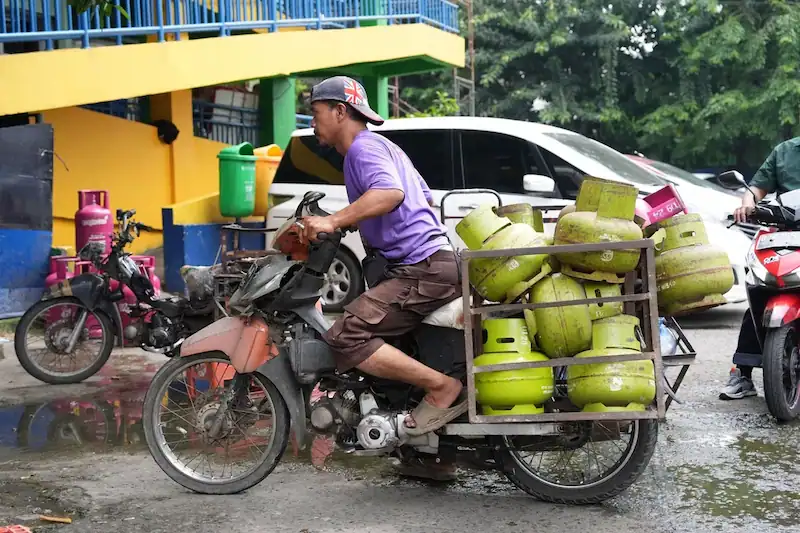


In a notable reversal, Indonesia's energy ministry has backtracked on its policy banning small retailers from selling canisters of subsidized cooking gas, a move that had sparked public outrage and long lines at designated facilities. The policy, which took effect on February 1, aimed to address irregularities in the distribution of the three-kilogram liquefied petroleum gas canisters, including price markups and sales to ineligible beneficiaries.
Energy Minister Bahlil Lahadalia faced backlash from angry residents during a visit to a distribution point in Tangerang city, prompting him to issue an apology and later be summoned by President Prabowo Subianto. The president emphasized the importance of ensuring affordable prices for consumers and reinstating retailers into operation.
Prabowo, who assumed office in October, had promised to review energy subsidies, with a focus on targeting them more effectively. While approximately 80% of the government's subsidy expenditure benefits middle- and higher-income Indonesians, the recent backlash highlighted the significance of affordable cooking gas for households across the country.
Social media trends reflected the widespread frustration and discontent with the policy, with the hashtag #lpg3kg gaining traction. Comments on a post by President Prabowo underscored the challenges faced by consumers in accessing affordable cooking gas, with some demanding the dismissal of Minister Lahadalia.
Cooking gas subsidies are a substantial component of Indonesia's subsidy expenditure, with the government allocating a significant portion of funds towards the three-kilogram LPG. While these subsidies play a crucial role in making essential commodities affordable, addressing distribution challenges and ensuring transparency will be key to managing the subsidy system effectively and efficiently in the future.