


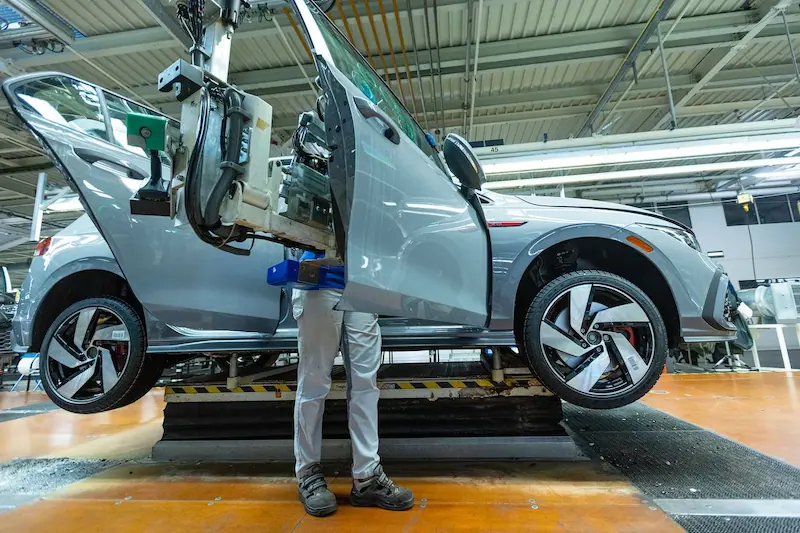


In a blow to hopes of a manufacturing sector revival, German industrial production took a significant hit in December, marking the steepest decline in five months. The 2.4% drop, largely attributed to downturns in the automotive and machinery industries, reflects a broader trend of stagnation in Europe's largest economy. This slump comes on the heels of conflicting data, with a recent surge in factory orders offering a glimmer of hope amidst the gloom.
As Germany braces for a forthcoming snap election, economic concerns loom large. The specter of a second consecutive year of GDP contraction in 2024 has already materialized, with growth forecasts for 2025 further dimmed. Chancellor Olaf Scholz's likely ousting by Friedrich Merz could herald a shift towards lower taxes and reduced regulations, but the road to economic recovery appears treacherous.
With the government downgrading growth projections and industry bodies warning of a historic third consecutive year of contraction, the outlook remains bleak. The Bundesbank's cautious forecast of a meager 0.2% growth underscores the fragility of Germany's economic landscape. Lingering threats, such as the potential fallout from escalating trade tensions between the US and China, only add to the uncertainty.
Despite a silver lining in December's trade surplus, the larger narrative points to lingering challenges ahead. As Germany navigates this critical juncture, the path to revitalizing its industrial powerhouse status seems fraught with obstacles, casting a shadow over any immediate hopes for a robust economic recovery.