


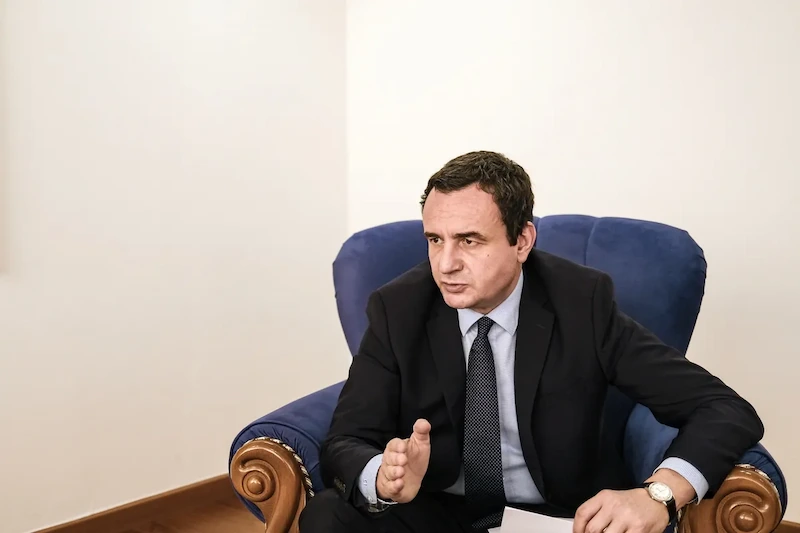


Kosovo’s Prime Minister Albin Kurti is confronting challenges in his efforts to form a new government after falling short of the majority needed to push through his nationalist policies and anti-corruption measures independently. The recent parliamentary elections saw Kurti's Self-Determination Movement secure 41% of the vote, a far cry from the outright majority he had previously secured in 2021.
Kurti, known for his strong anti-corruption stance and focus on integrating Serb-majority communities, now finds himself in a position where he must seek coalition partners to extend his rule. If unable to form a coalition, sources familiar with the premier’s thinking suggest he might consider moving into the opposition.
The Prime Minister’s uncompromising leadership style has garnered both support and criticism. While many Kosovars back his efforts to combat corruption and strengthen Kosovo's authority over Serb-majority regions, the EU and the US have expressed concerns over his approaches, accusing him of fueling ethnic tensions and conflict with neighboring Serbia.
With the return of Donald Trump to the White House looming as a potential challenge, given the criticism Kurti faced from Trump allies in the past, the Prime Minister remains focused on his anti-corruption agenda. At a recent rally, he denounced his rivals as “thieves” and signalled a reluctance to engage with Kosovo’s main opposition parties.
As Kurti navigates the post-election landscape, discussions behind closed doors indicate a willingness to forge alliances with lawmakers representing non-Serb ethnic minorities. In the event that a majority coalition remains elusive, Kurti is open to relinquishing his position and moving into opposition.
The outcome of Sunday’s elections marked a milestone as Kosovo saw a government complete a full four-year term for the first time since declaring independence in 2008. The main opposition parties, the Democratic Party and the Democratic League, garnered significant support, with potential coalitions adding pressure on Kurti to consider compromises, especially regarding relations with Serbia.
Kurti’s bold moves to extend control over Serb-majority regions have sparked tensions with Serbia’s President Aleksandar Vucic, who has accused him of inciting violence. Kurti, a former activist imprisoned under Milosevic’s regime, sees these actions as essential to solidifying Kosovo’s sovereignty. However, the US and EU have condemned the measures, emphasizing the importance of normalizing Kosovo-Serbia relations for their paths to EU membership.
In the complex political landscape of Kosovo, Prime Minister Albin Kurti faces a delicate balancing act as he seeks to navigate coalition-building, international scrutiny, and the expectations of a populace yearning for change and progress.