


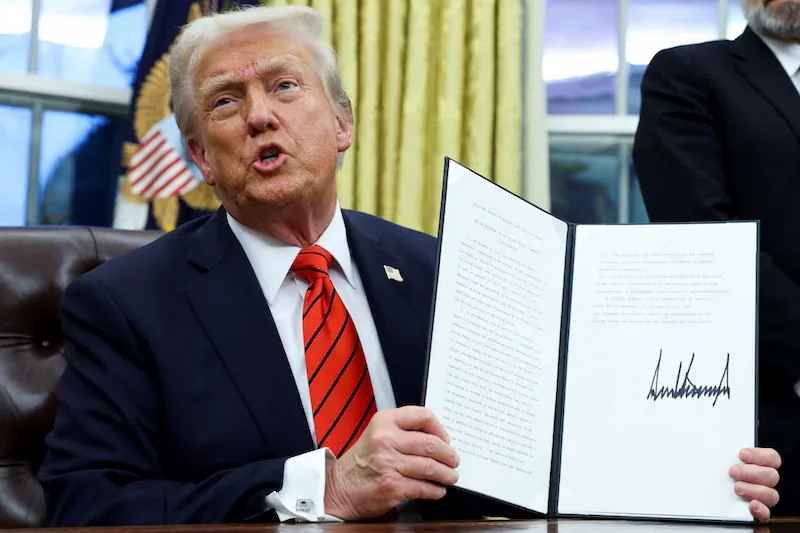


In a move that has sparked international condemnation, U.S. President Donald Trump has chosen to impose tariffs on all steel and aluminium imports, threatening to escalate into a full-blown trade war. The decision, signed on Monday, significantly raises the U.S. tariff rate on aluminium to 25% and eliminates previous country exceptions and quota deals, affecting imports from major suppliers like Canada, Brazil, Mexico, and South Korea.
Reacting to this decision, Mexican Economy Minister Marcelo Ebrard criticized the move as unjustified and unfair, hinting at potential reciprocal tariffs on steel and aluminium imports from the U.S. Canadian Prime Minister Justin Trudeau called the tariffs unacceptable and pledged a firm response if necessary, while European Commission President Ursula von der Leyen stated that the EU would take firm and proportionate countermeasures in response.
Germany's record trade surplus with the U.S. further complicates the situation, with American businesses and industry leaders expressing concerns over the potential consequences of these tariffs. The European Union is considering reactivating previous tariffs on U.S. products if necessary, which were suspended under a previous agreement.
Executives from various industries heavily reliant on steel and aluminium imports are now scrambling to navigate the fallout, with fears of increased costs and disruptions in supply chains. This latest development in Trump's trade policies has caused uncertainty and anxiety among businesses, with many struggling to plan ahead amidst the ongoing turbulence in global trade relations.
Despite China's limited steel exports to the U.S., the issue of excess steel capacity and trade practices remains a significant concern. The U.S. argues that China's subsidized production distorts global markets and leads to the transshipment of steel through other countries to evade tariffs, creating further complications in the international trade landscape.
As tensions mount, the global economic outlook is clouded by uncertainty, with fears of a potential trade war looming large on the horizon. The implications of Trump's decision to impose tariffs on steel and aluminium imports are far-reaching, impacting businesses, consumers, and economies around the world.