


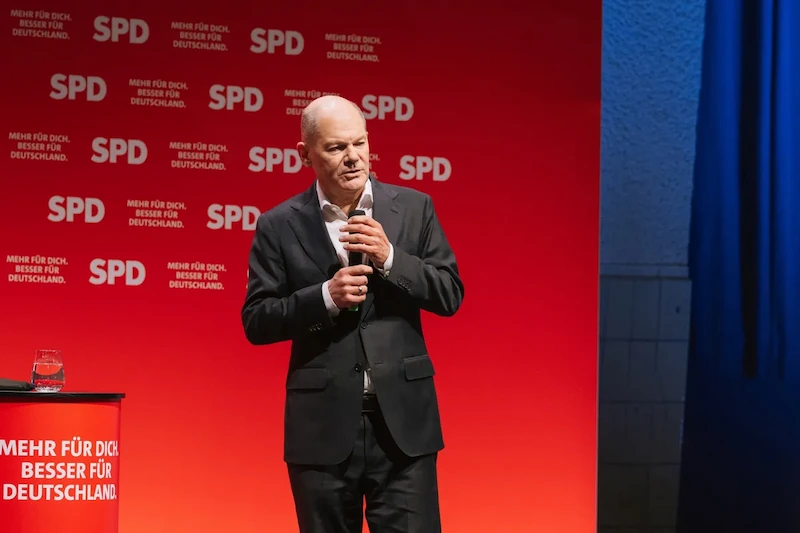


Germany is at a crossroads as it faces economic challenges that have led to a sharp decline in support for Chancellor Olaf Scholz and his Social Democrats. With the country's economy failing to recover from the pandemic as quickly as its peers, the upcoming election is shaping up to be one of the worst defeats for an incumbent leader in German history.
The manufacturing sector, a key pillar of the German economy, has been hit hard by supply chain disruptions, rising energy and labor costs, and fierce competition from Chinese electric vehicle makers. This has led to job cuts and a decline in industrial production, highlighting a worrisome trend of decreasing competitiveness.
The country's heavy reliance on Russian energy imports has also left it vulnerable to disruptions, leading to efforts to diversify energy sources by investing in renewables. While progress has been made in expanding solar and wind energy capacity, challenges remain in grid infrastructure and energy storage, especially after the phase-out of nuclear power.
Government finances have come under strain as economic growth lags behind, leading to debates over public investment and fiscal rules. With pressure to increase spending on critical areas such as infrastructure and education, Germany's next leaders will need to navigate a delicate balance between stimulating growth and maintaining fiscal discipline.
Despite these challenges, the labor market has remained relatively robust, with low unemployment rates compared to past peaks. However, skills shortages in key sectors and demographic shifts pose long-term challenges for the workforce.
As Germany looks to the future, the next government will need to implement structural reforms to boost potential growth and restore confidence in the economy. By addressing key issues such as competitiveness, energy transition, and public investment, the new leadership has the opportunity to steer the country towards a path of sustainable growth and prosperity.