


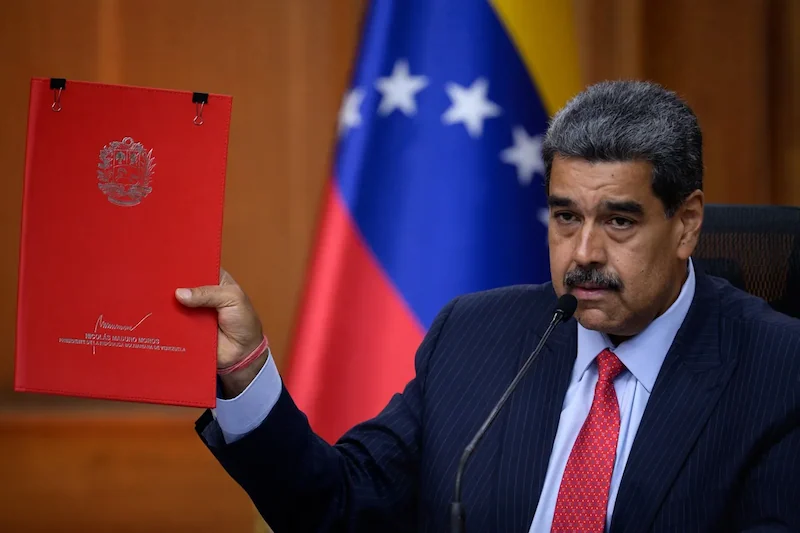


Venezuela's President Nicolás Maduro has put forth a bold proposal to reform the country's constitution, aiming to restructure territorial divisions and revamp the economy. In a speech before the National Assembly, Maduro outlined his vision to establish a new democratic state system that integrates communal, social, and popular power.
The proposed reforms would introduce territorial divisions known as communes, a move that could potentially redefine regional politics by reducing the influence of municipalities and states. This restructuring is seen by some as a means for Maduro to further consolidate power, particularly in the aftermath of accusations by the Venezuelan opposition regarding electoral fraud in the recent presidential election.
For the reforms to be enacted, they must first receive approval from at least two-thirds of lawmakers in the National Assembly. Following this, a public consultation would be held within 30 days to gather feedback from the Venezuelan populace. It is worth noting that a prior attempt to amend the constitution in 2007, led by former President Hugo Chávez, did not garner sufficient support in a national referendum.
Maduro's proposal represents a significant effort to bring about fundamental changes in Venezuela's governance and economic landscape. If successful, these reforms could mark a new chapter in the country's development, shaping its future trajectory in the years to come.