


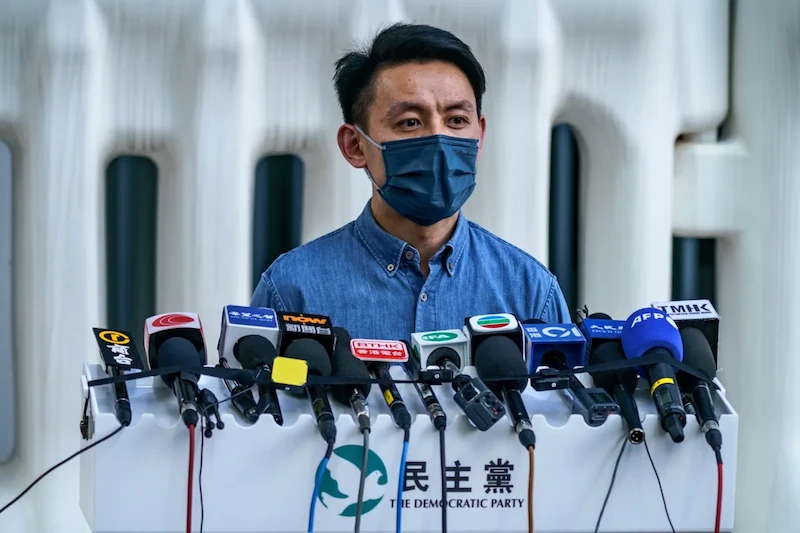


In a significant development reflecting the ever-tightening grip of Beijing's national security crackdown on dissent in Hong Kong, leaders of the city's oldest pro-democracy party, the Democratic Party, have announced plans to seek a vote for its dissolution. This decision comes as a response to the silencing of dissent and the barring of opposition politicians from public office in the wake of President Xi Jinping's measures to quash political opposition.
Lo Kin-hei, the chairman of the Democratic Party, revealed that the organization will initiate a vote among its approximately 400 members to decide on the dissolution. Lo also disclosed the formation of a committee, consisting of three members, to determine the timeline and logistical aspects of the dissolution process. While the exact reasons behind this move were not explicitly stated, it is speculated that escalating political pressure and the challenging political environment in Hong Kong played a significant role.
Established in 1994 prior to Hong Kong's return to Chinese sovereignty, the Democratic Party had been a prominent opposition force in the city, advocating for greater democratic rights through its participation in legislative elections. However, the political landscape drastically shifted in 2020 when Beijing imposed measures allowing for the disqualification of lawmakers deemed disloyal, leading to the removal of several Democratic Party members from the Legislative Council.
The erosion of political freedoms worsened with the enactment of the national security law, resulting in the imprisonment of key opposition figures, including former Democratic Party Chairman Wu Chi-wai. The fate of Wu and three other former legislators, who received lengthy prison sentences on subversion charges, exemplifies the harsh crackdown on dissenting voices in the city.
Following the disbanding of the Civic Party in 2023, the Democratic Party's potential dissolution marks another blow to political opposition in Hong Kong. Simultaneously, the escalating crackdown on dissent has drawn criticism from Western nations, with concerns rising over the city's dwindling autonomy and its status as a global financial hub.
As Hong Kong braces for the upcoming general election of the Legislative Council later this year, the looming dissolution of the Democratic Party underscores the challenges faced by pro-democracy forces in navigating the increasingly restricted political landscape under Beijing's tightening control.