


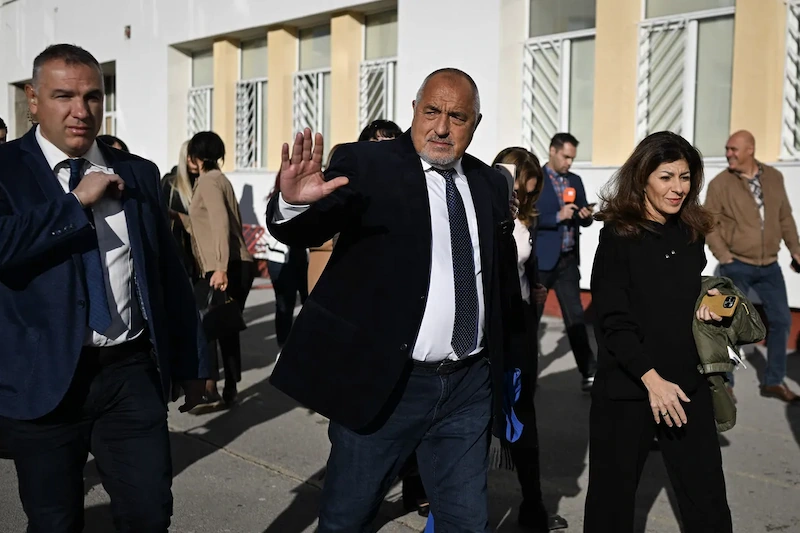


In a significant development for Bulgaria's ongoing political crisis, the country's Constitutional Court has mandated a complete recount of the results from the recent snap election. This decision has the potential to shake the foundations of the ruling majority in the Balkan nation.
Despite multiple attempts at forming a stable government, Bulgaria has been trapped in a cycle of political instability, with seven elections held since 2021 failing to bring about a lasting solution. Following the most recent election in October, Boyko Borissov, a former long-term Prime Minister leading the largest party in Bulgaria, managed to cobble together a coalition with the support of only 126 lawmakers in the 240-member assembly.
Several parties have raised concerns and lodged appeals regarding alleged violations during the October election, particularly at the local level. Of particular note is the case of a small nationalist party that missed out on parliamentary representation by a mere 31 votes.
The electoral commission has now been tasked with conducting a full recount of all ballots cast, with a focus on determining if any discrepancies found in nearly half of the sampled polling stations could influence the distribution of seats in parliament. This decision by the Constitutional Court injects further uncertainty into Bulgaria's political landscape.
Plunging into turmoil four years ago amidst widespread anti-corruption protests that ousted Borissov from power, Bulgaria has since struggled to regain its footing. The ongoing crisis has not only hindered the country's access to crucial EU recovery funding but has also impeded its ability to provide military assistance to Ukraine and delayed its aspirations to join the eurozone. Prime Minister Rosen Zhelyazkov, under Borissov's leadership, has now placed a strong emphasis on steering the government towards adopting the euro as the national currency by January 2026.
The outcome of the full recount following the Court's ruling will undoubtedly have far-reaching implications for Bulgaria's political future, with the possibility of reshaping the current political landscape and potentially paving the way for a more stable governance structure.