


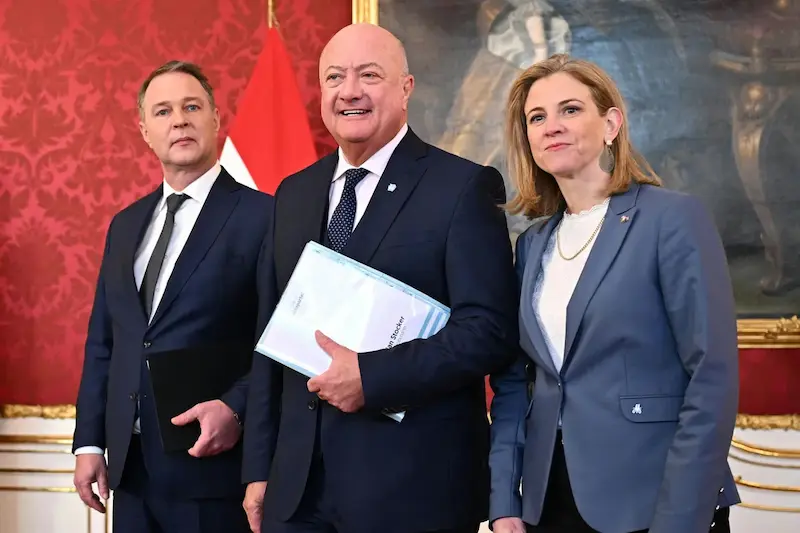


In a historic move, three moderate Austrian parties have finally reached a consensus to form a coalition government, bringing an end to a lengthy 151-day negotiation period. The coalition, composed of the People's Party, Social Democrats, and the liberal NEOS, excludes the nationalist Freedom Party despite winning the most votes in the previous election. This groundbreaking agreement aims to navigate Austria out of a second year of recession by implementing stringent budget cuts and revitalizing the struggling economy.
The key focus of the coalition will be to reduce Austria's budget deficit to below 3% of economic output this year, steering clear of potential penalties from the European Union. The government program outlines ambitious targets such as collecting €1 billion in bank levies within two years, and significant budget savings of €6.3 billion this year followed by €8.7 billion in 2026. Long-term structural reforms, including a commitment to increase defense spending to 2% of GDP by 2032 in this militarily neutral nation, also underline the coalition's determination to secure Austria's financial stability.
Christian Stocker, the anticipated next chancellor from the People's Party, emphasized the need for consensus and pragmatism in the face of global challenges and a challenging economic landscape. With Social Democratic leader Andreas Babler set to become vice-chancellor and appoint a finance minister from his party, and NEOS chief Beate Meinl-Reisinger expected to take on the foreign minister role, the coalition is poised to bring fresh perspectives and collaborative solutions to the forefront.
Despite initial setbacks in previous negotiations and political tensions, the newfound "candy coalition" has demonstrated a commitment to compromise, setting aside differences for the greater good of the nation. Geopolitical-risk analyst Marcus How cautioned that the coalition may face internal strife and potential voter backlash over certain reforms such as a de facto increase in the retirement age, highlighting the challenges that lie ahead.
As Austria prepares for a new government under this coalition, reminiscent of Germany's recent political upheaval, the agreed government program has a fail-safe mechanism for snap elections in case of dissent, ensuring accountability and stability in governance. Pending approval by party members, the incoming government could be sworn in by President Alexander Van der Bellen within the coming week, ushering in a new era of governance and economic recovery for Austria.