


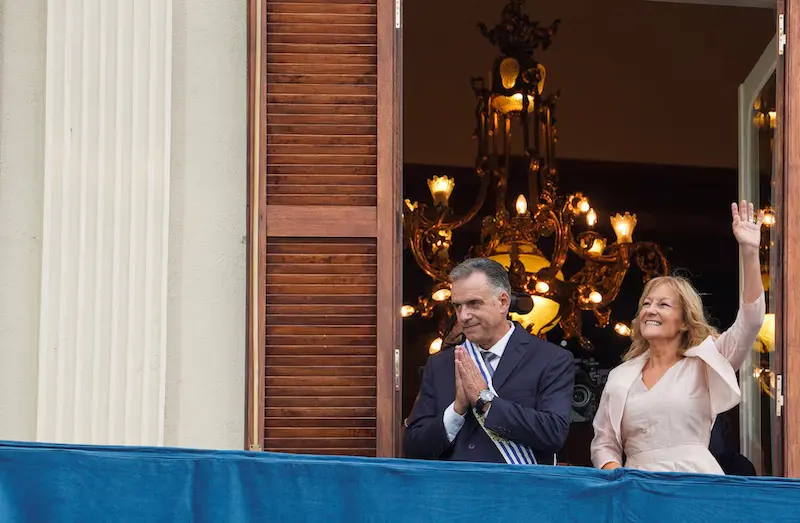


Uruguay is on the brink of a political transition towards the center-left as Yamandu Orsi assumes office as the country's next president. Backed by former leftist President Jose "Pepe" Mujica, Orsi's narrow victory in the November election marked a significant shift from the ruling center-right coalition. At 57 years old, Orsi represents a moderate voice promising to strike a new balance between social welfare and economic growth, advocating for a "modern left" agenda.
In his inaugural address at Montevideo's Legislative Palace, Orsi emphasized the need for new proposals and continuous construction instead of a complete re-foundation. Amid cheers and applause, he credited the iconic leftist Mujica and thanked outgoing conservative President Luis Lacalle Pou for the smooth transition of power.
During the campaign, Orsi reassured Uruguayans of maintaining stability in the relatively prosperous South American nation known for its progressive policies on cannabis and cattle ranching. Although the economy is projected to sustain growth, issues like high living costs, inequality, and crime rates have fueled discontent with the outgoing government.
With a majority in the senate, Orsi's Broad Front coalition aims to address poverty and stimulate growth by attracting investments and skilled labor, all without increasing taxes. The new administration faces the challenge of balancing foreign policy, particularly dealing with trade tensions and relations with major partners like China and the United States.
Uruguay's strong ties with China, its top trading partner, and collaboration with the U.S. in areas like cybersecurity require Orsi to navigate complex diplomatic waters. Negotiations for a bilateral trade deal with Beijing and balancing interests within Mercosur with ideologically diverse neighbors like Brazil and Argentina will test Uruguay's diplomatic agility.
Orsi's decision-making will also shape the country's stance on international issues, as seen in the recent refusal to invite representatives from Venezuela, Cuba, and Nicaragua to his inauguration, aligning with the outgoing government's stance on undemocratic regimes. With a new leadership style and foreign policy approach, Uruguay under President Orsi embarks on a path of change and adaptation in a dynamic global landscape.