


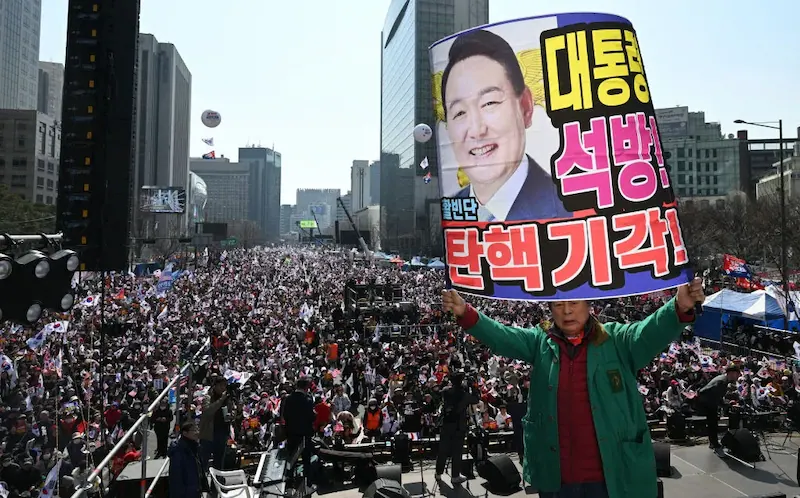


In a rapid turn of events, South Korean President Yoon Suk Yeol has been freed from prison following a court decision to overturn his arrest. The release of the impeached leader came after the Seoul Central District Court accepted Yoon’s complaint regarding the validity of his arrest, leading to his immediate release from the detention center.
Yoon had made headlines globally for his controversial declaration of martial law in December, a move that shook the nation and raised concerns both domestically and internationally. Accused by anti-corruption prosecutors of insurrection, Yoon faced a tumultuous period as his actions came under intense scrutiny.
Despite the pending criminal trial, Yoon maintains his innocence, describing his actions as a necessary measure to combat internal threats posed by North Korea sympathizers. The deployment of troops to the National Assembly was explained by Yoon as a step to maintain peace and order, rather than obstructing legislative proceedings.
The uncertainty surrounding Yoon’s position had a significant impact on various aspects of South Korean society, including consumer sentiment, financial markets, and diplomatic relations. With the specter of his impeachment looming, the country braced for potential snap elections and further political upheaval.
Yoon’s arrest in January marked a historic moment in South Korean politics, as he became the first sitting president to be incarcerated and face charges of insurrection. In his absence, Finance Minister Choi Sang-mok assumed the role of acting president, steering the country through a period of transition and uncertainty.
Yoon's legal team successfully argued for the invalidity of his arrest, challenging the jurisdiction of the court that issued the warrant and contesting the timing of the indictment. While prosecutors defended their actions as following due process, the court’s decision to overturn the arrest underscored the complexity and contentious nature of Yoon’s case.