


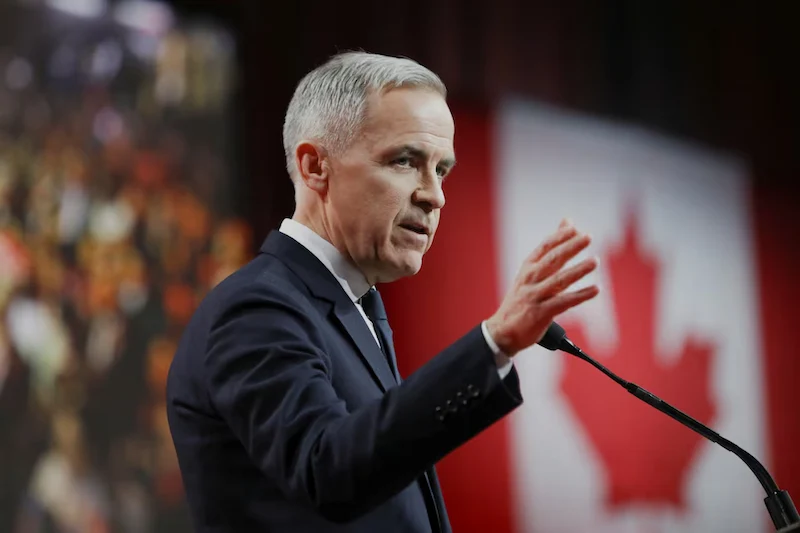


Former central banker Mark Carney's meteoric ascent to the leadership of Canada's Liberal Party and imminent role as the country's prime minister have set the stage for a rapid handover of power. Following a decisive victory in the party's leadership contest, Carney's focus is squarely on tackling the looming threats from U.S. President Donald Trump, who has escalated tensions with Canada through annexation threats and a potential trade war.
In a meeting with current Prime Minister Justin Trudeau, Carney assured a seamless and quick transition of power, signaling his readiness for the challenges ahead. With Trump's tariff actions deeply affecting Canada, including a 25% levy on steel and aluminum, Carney's administration is poised to take a firm stance in defense of Canadian interests.
Carney's sharp criticism of Trump's policies and determination to uphold Canadian sovereignty have resonated across the country, earning him support from both government officials and the public. Provinces, including Ontario, are already taking retaliatory measures, such as imposing surcharges on electricity exports, in response to the U.S.'s aggressive trade tactics.
As Carney prepares to lead Canada into uncertain times, his lack of political experience but extensive financial background presents a unique set of challenges. The Liberals' resurgence in popularity, fueled by a renewed sense of national unity and opposition to Trump's measures, will be put to the test as Carney navigates the complex landscape of international trade negotiations and domestic politics.
With the possibility of a general election looming, Carney's leadership will be closely scrutinized as he seeks to maintain the party's newfound momentum and confront the daunting task of steering Canada through turbulent waters. As the first non-political figure to ascend to the role of prime minister, Carney's unorthodox path to power underscores the unprecedented circumstances facing the country in the midst of global economic uncertainty.