


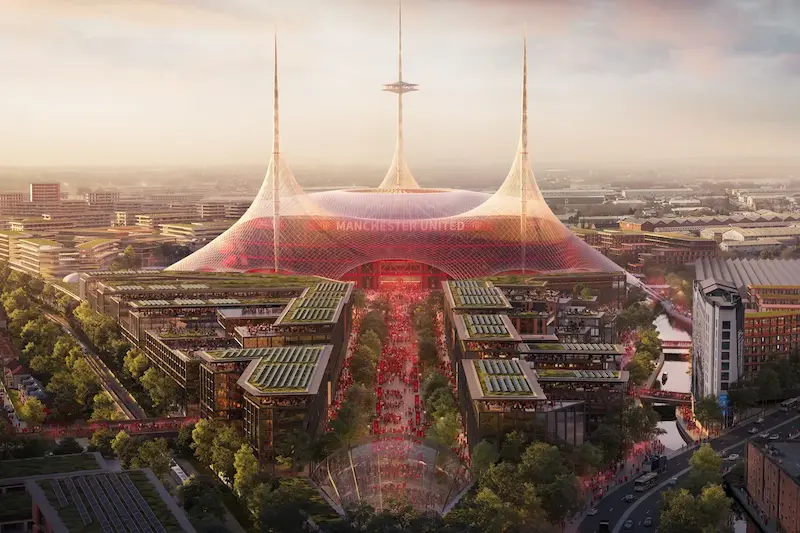


In an ambitious move to revitalize its infrastructure and keep up with its European rivals, Manchester United Plc has announced plans to construct an impressive 100,000-seater stadium adjacent to its iconic Old Trafford venue. The current stadium, with a capacity of over 74,000, has long been revered as one of the largest in the Premier League, but its aging facilities and outdated amenities have posed a challenge in the face of modern sports venues.
Billionaire co-owner Jim Ratcliffe emphasized the need for a new stadium that could compete with the best arenas in global sports, setting the stage for a project that is estimated to cost upwards of $2 billion. Ratcliffe highlighted that the timeline for the move would be contingent on the broader rejuvenation of the surrounding area, hinting at a strategic and holistic approach to the development.
Manchester United is carefully considering various funding options, cognizant of the financial implications of such a monumental undertaking. CEO Omar Berrada stressed the importance of financial sustainability for the club, signaling a pragmatic approach in managing costs during this pivotal transition period.
The decision to pursue a new stadium comes on the heels of Ratcliffe's significant investment in the club, aimed at steering Manchester United towards a more competitive position in the Premier League. Despite facing on-pitch challenges and financial concerns, the club's leadership is resolute in their commitment to modernizing their facilities to enhance the overall fan experience and long-term success.
The prospect of a "Wembley of the North" has stirred public interest and raised hopes for economic revitalization in the region. Ratcliffe's vision extends beyond a mere stadium upgrade, with plans to leverage the project for job creation and economic growth that could benefit the community at large.
While seeking potential public financing poses a political challenge, Manchester United remains optimistic about the positive impact of the stadium project. Key stakeholders, including the Mayor of Greater Manchester, have expressed support for the initiative, underscoring the potential for significant urban regeneration and economic advancement.
As Manchester United positions itself for a new era of growth and competitiveness, the stadium redevelopment represents a bold step towards reclaiming its status as a global football powerhouse. By aligning strategic investments with broader economic interests, the club aims to propel itself back to the forefront of European football and secure its position as a commercial powerhouse in the sporting world.