


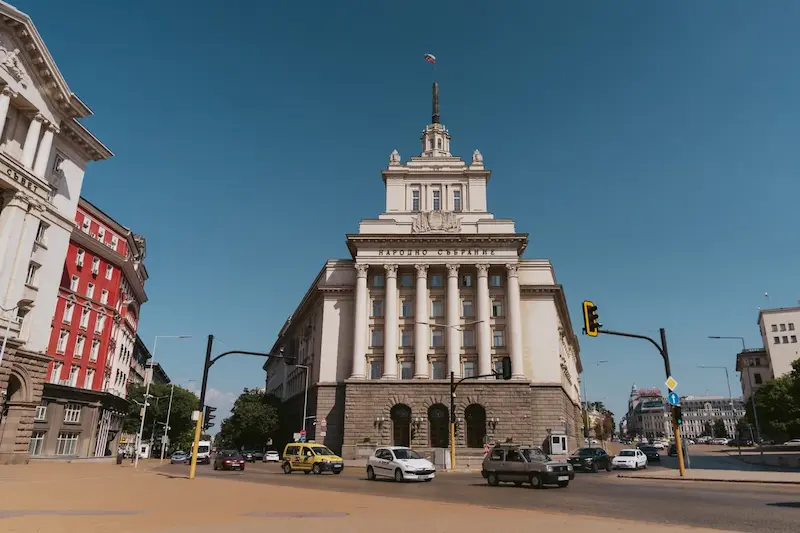


Bulgaria is once again plunged into political uncertainty as a court-mandated recount of the October election results has further fractured the already fragile parliament, leaving the government with a precarious majority.
The country's prolonged political crisis, exacerbated by seven elections in four years, remains unresolved. The newly-formed cabinet under the leadership of former Prime Minister Boyko Borissov's Gerb party now holds a reduced majority of 121 votes in the 240-member assembly, down from the previous 126.
The government's tenuous position raises the specter of yet another round of elections, threatening to erode public trust in the democratic process. This would be a major setback for Bulgaria, the European Union's poorest member, and could potentially jeopardize the country's ambitions to join the eurozone.
Deputy Prime Minister Tomislav Donchev cautioned that a government solely focused on survival will struggle to achieve meaningful progress. Borissov, who saw his long-standing political dominance challenged by mass protests against corruption in 2021, emerged victorious in the snap election in October but fell short of securing a majority.
Following legal challenges by several parties, the Constitutional Court ordered a nationwide recount last month due to numerous irregularities and discrepancies in the election reports. This recount resulted in the dismissal of 16 lawmakers from various parties and granted Greatness, a minor anti-establishment nationalist party that narrowly missed the electoral threshold, ten seats in parliament.
The altered composition of parliament presents a significant obstacle for Borissov's government to pass crucial reforms. This disruption could impede Bulgaria's plan to adopt the euro in early 2023—an objective pursued by successive governments but fraught with setbacks.
Borissov, emphasizing his goal of Bulgaria joining the eurozone, accused his opponents of seeking to sow chaos by contesting the October election results. The uncertainty surrounding the government's stability and the looming challenges ahead cast a shadow over Bulgaria's political landscape, raising concerns about the country's future direction.