


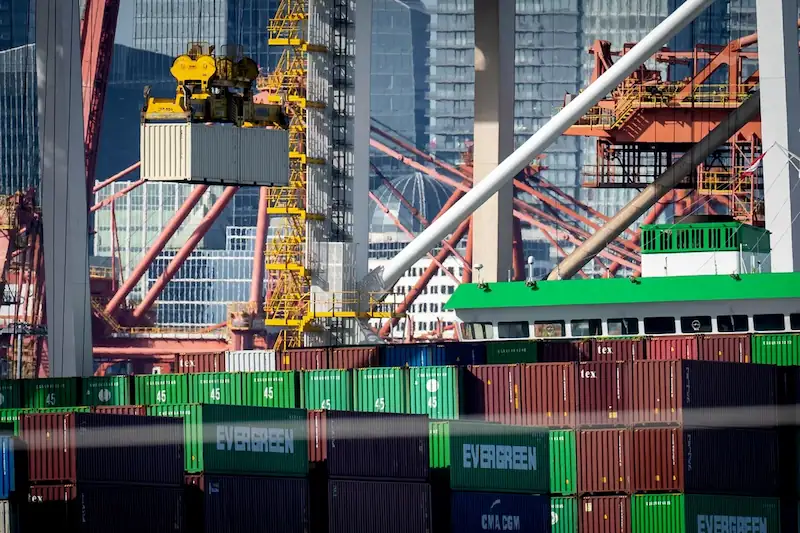


In a pivotal moment for Canada's economy, Prime Minister Mark Carney is poised to call for a critical election campaign, driven by the urgent need to address longstanding issues exacerbated by US President Donald Trump's trade war threats. As the spotlight sharpens on fixing key obstacles hindering economic growth, Carney and his chief rival, Conservative Leader Pierre Poilievre, are gearing up to present their visions for securing Canada's future amidst escalating tensions with the US.
Both candidates are vying to convince Canadians that they are the best-equipped leaders to shield the country from Trump's aggressive "economic force" tactics aimed at reshaping Canada's economic landscape. The focus is now squarely on addressing deep-rooted challenges that have long held back the Canadian economy: heavy reliance on the US as an export market, internal trade barriers between provinces, stagnation in productivity, and lackluster business investment.
The upcoming election marks a turning point, signaling the end of the economic strategy championed during Justin Trudeau's tenure, characterized by government expansion, higher taxes on the affluent, and a reliance on rapid population growth. Carney, the former central bank governor turned political leader, and Poilievre, the Conservative front-runner, are gearing up to tackle these pressing issues head-on, signaling a departure from the status quo.
With Trump's trade war intensifying, both candidates have pledged to fast-track critical natural resources and energy projects, while addressing infrastructure needs to diversify trade partners and bolster Canada's economic resilience. Amidst a renewed push to enhance productivity, both Carney and Poilievre are focused on capping immigration levels to sustainable levels, while incentivizing investments in technology and infrastructure to boost Canada's overall competitiveness.
The housing market presents another critical challenge, with soaring prices and supply constraints posing significant obstacles for average Canadians. Poilievre's rallying cry of "Canada is broken" during peak housing frustrations has now transformed into a "Canada First" strategy following Trump's threats, doubling down on promises to unleash a massive homebuilding boom. Meanwhile, Carney aims to supercharge construction efforts and deliver 4 million new homes by 2035, touting federal investments in housing as a key driver of economic growth.
Amid mounting fiscal pressures and calls for increased defense spending in the face of Trump's provocations, both candidates have outlined contrasting approaches to government spending. Poilievre advocates for finding savings to match new expenditures, while Carney proposes a dual-budget system to balance operational costs and fuel major infrastructure investments.
As Canada stands at a crucial juncture, the urgency to seize this moment of awakening prompted by Trump's actions is palpable. The promise of a renewed focus on economic diversification, enhanced productivity, and infrastructural advancements represents a pivotal opportunity for Canada to redefine its economic trajectory and reduce its reliance on the US market. With the nation gearing up for a transformative election, the stage is set for a new chapter in Canada's economic landscape.