


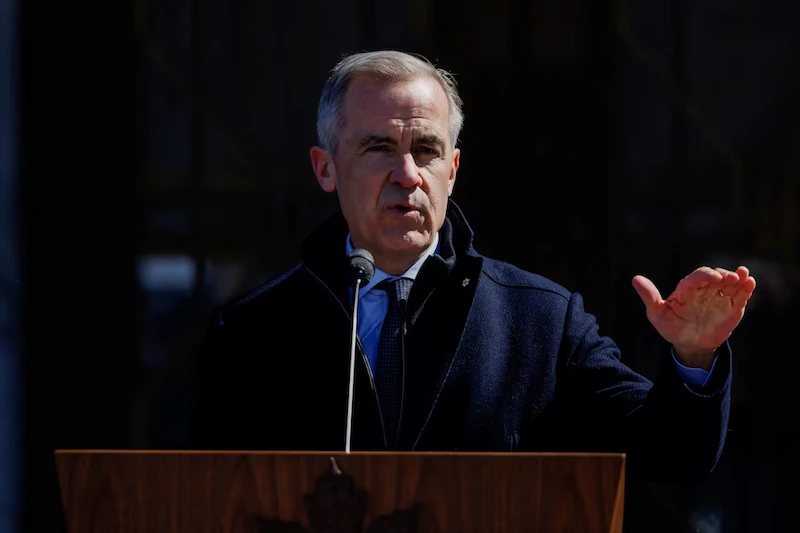


In a surprising move, newly appointed Canadian Prime Minister Mark Carney announced a snap election set for April 28, citing the need for a strong mandate to confront the escalating threat posed by U.S. President Donald Trump. The relationship between the two longtime allies has soured significantly since Trump initiated tariffs on Canadian imports and even hinted at the annexation of Canada as the 51st U.S. state.
While the next election was not due until October 20, Carney's decision to call for an early election comes amidst a remarkable resurgence in the polls for his Liberal Party following the resignation of former Prime Minister Justin Trudeau and mounting tensions with the U.S. administration. Carney's initial tone of cooperation with Trump shifted dramatically as he accused the U.S. president of attempting to undermine Canadian sovereignty for American gain.
Addressing the press after the election announcement was approved by the Governor General of Canada, Carney emphasized the critical nature of the current situation, stating, "We are facing the most significant crisis of our lifetimes because of President Trump's unjustified trade actions and his threats to our sovereignty. We will not allow him to dismantle Canada for America's benefit."
With polls indicating a growing concern among Canadians over the potential impact of Trump's trade policies, Carney has positioned himself as the candidate best suited to navigate these turbulent times, having recently assumed leadership of the Liberal Party. While critics have highlighted Carney's lack of political experience and raised concerns about transparency regarding his financial assets, the focus remains on his ability to lead Canada through a challenging period.
Meanwhile, Conservative leader Pierre Poilievre has launched a campaign emphasizing national interests and the need for economic growth as a means of countering Trump's influence. As both parties gear up for an intense campaigning period, the outcome of the election may hinge on how effectively each candidate addresses the pressing concerns raised by the U.S.-Canada rift.
Despite questions surrounding Carney's political acumen and linguistic capabilities in French-speaking Quebec, the election is shaping up to be a referendum on leadership during times of crisis and the ability of the candidates to navigate an increasingly volatile international landscape. And as Canadians prepare to head to the polls, the stakes have never been higher in this pivotal moment for the nation's future.