


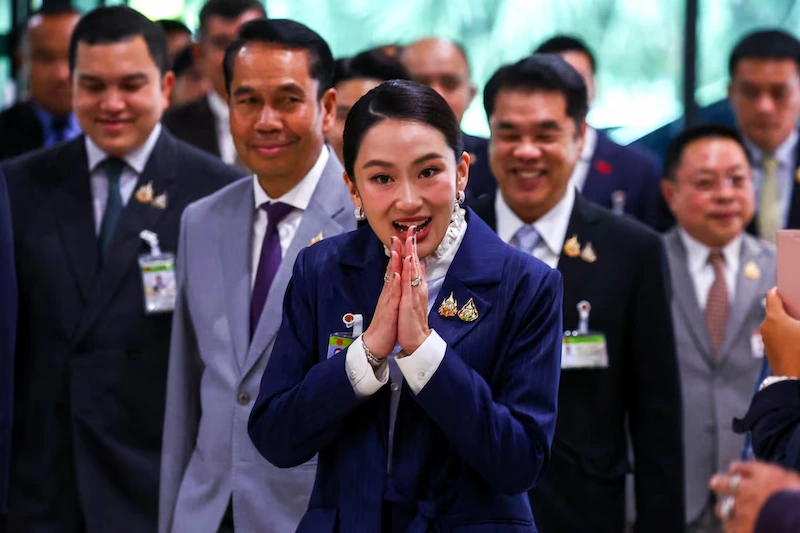


In a pivotal no-confidence vote in parliament, Thai Prime Minister Paetongtarn Shinawatra emerged victorious, solidifying her position and quelling doubts about her leadership. Despite facing a relentless barrage of criticisms during a two-day censure debate, Paetongtarn confidently navigated the proceedings, garnering the support of 319 out of 488 lawmakers present.
The relentless attacks leveled against her, including accusations of lack of qualifications, economic ineptitude, tax evasion, and being beholden to her powerful family, particularly her billionaire father Thaksin Shinawatra, did little to shake Paetongtarn's resolve. This vote marked a pivotal moment for the 38-year-old premier, who was unexpectedly thrust into the political spotlight over seven months ago, following the ousting of her predecessor due to an ethics violation.
While Paetongtarn's approval ratings may be lukewarm, and economic growth may lag behind regional counterparts, her victory in the no-confidence vote underscored the firmness of her 11-party coalition government. This outcome signals a period of relative stability in a nation that has been marred by political upheavals for the past two decades.
In response to the vote, Paetongtarn expressed gratitude on social media, acknowledging the support of her coalition partners and reaffirming her commitment to serving the people. Despite the relentless scrutiny and public skepticism, she remains steadfast in her dedication to her duties and pledges to lead the country to prosperity.
The censure debate also shed light on the enduring influence of Paetongtarn's father, Thaksin, a polarizing figure in Thai politics. The opposition party directed much of its criticism towards their close relationship, highlighting concerns of dynastic rule and behind-the-scenes influence. However, Paetongtarn maintains that her focus is on governing effectively, emphasizing that her work should be the yardstick by which she is judged, not her family ties.
Looking ahead, while Paetongtarn may have survived this no-confidence vote, challenges and scrutiny persist. Opposition leader Natthaphong Ruengpanyawut continues to question her abilities, warning of potential consequences if leadership qualities are lacking. As Thailand navigates a complex political landscape, Paetongtarn's resilience and determination will be tested as she endeavors to lead the nation forward amidst a backdrop of deep-rooted political rivalries and systemic challenges.