


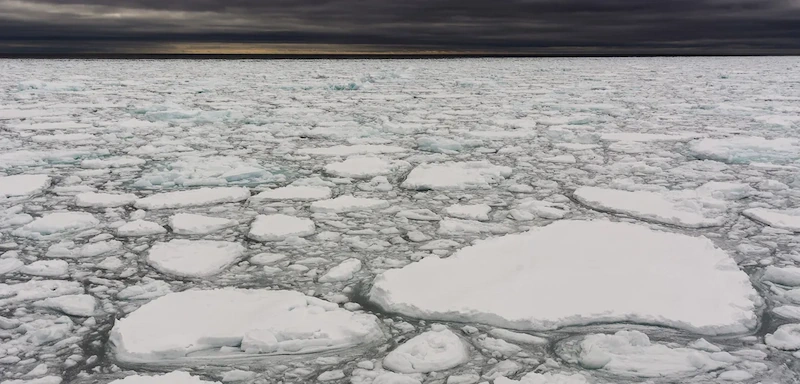


In a concerning turn of events, satellite records reveal that the Arctic Ocean recently experienced its smallest winter ice cover in nearly five decades, with only 5.53 million square miles of sea ice at its peak on March 22. This marks a significant decline of 510,000 square miles compared to the median coverage from previous years, equivalent to an area larger than Peru. The National Snow & Ice Data Center at the University of Colorado at Boulder reported this startling information, emphasizing the severity of the situation.
The implications of this drastic loss of Arctic winter ice are far-reaching. With the Arctic warming at an alarming rate, the threat of feedback loops intensifying climate change looms large. The disappearance of ice means that warmer, darker ocean waters are absorbing more solar energy, contributing to the trapping of additional heat. This vicious cycle perpetuates the cycle of warming, with potential consequences for global weather patterns driven by temperature differences between high and low latitudes.
Moreover, the geopolitical and security ramifications of dwindling sea ice are coming into focus as the Arctic opens up to increased shipping and potential military activities. Russian President Vladimir Putin recently projected a significant rise in cargo shipments via the Northern Sea Route, underscoring the changing dynamics in the region.
Meanwhile, in the Southern Hemisphere, Antarctic sea ice also faced troubling trends. At its lowest point for the year, Antarctic sea ice covered just 764,000 square miles, tying with previous years for the second lowest on record. This figure represents a 30% decrease from levels before 2010, highlighting the stark reality of diminishing sea ice on both poles.
As the climate crisis intensifies, experts warn that these record lows in Arctic and Antarctic sea ice could have lasting consequences. The delicate balance of the planet's climate system is at stake, with the loss of sea ice serving as a stark reminder of the urgent need for global action to mitigate climate change before irreversible damage occurs.