




A powerful earthquake measuring 7.7 on the Richter scale has wreaked havoc in Myanmar, claiming the lives of over 1,600 people and causing extensive destruction across the region. The disaster, considered one of the deadliest to hit the country in recent memory, has left airports, bridges, and highways in shambles, further exacerbating the challenges faced by Myanmar's beleaguered population due to ongoing civil unrest. The military government, which controls the country, has reluctantly accepted help from hundreds of foreign rescue personnel as the magnitude of the tragedy unfolds.
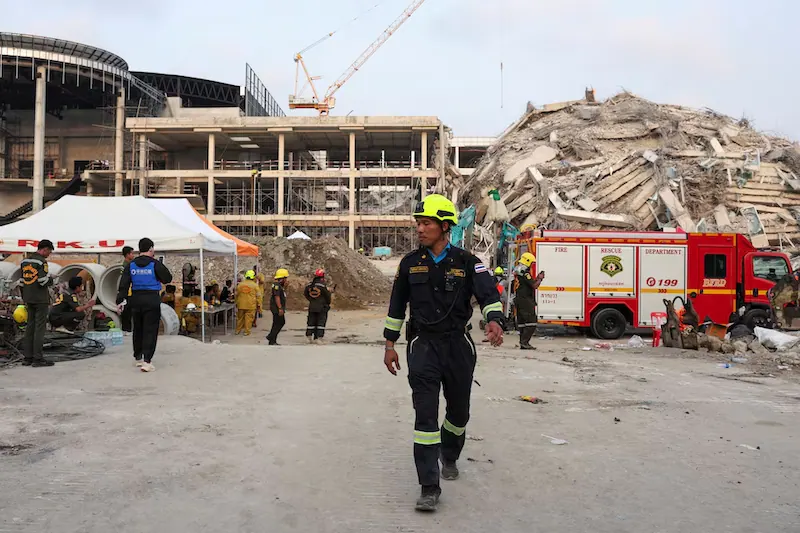
As rescue efforts intensify in Myanmar's second-largest city, Mandalay, survivors are resorting to using their bare hands to search for those trapped beneath the debris, highlighting the lack of essential equipment and support from authorities. In neighboring Thailand, where the tremors of the quake were also felt, efforts are underway to rescue individuals trapped under the rubble of a collapsed skyscraper in Bangkok, emphasizing the far-reaching impact of the seismic event.
The earthquake's aftermath has resulted in a death toll that continues to rise, with the military government estimating the figure at 1,644 as of the latest reports. The destruction and loss are particularly severe given Myanmar's already strained resources and infrastructure, further exacerbated by the forced closure of key airports in Naypyitaw and Mandalay due to significant damage.
With communication lines disrupted and critical services overwhelmed, the urgent need for international assistance has prompted a rare appeal from Myanmar's junta chief, Senior General Min Aung Hlaing, who visited the worst-affected areas to oversee rescue operations. The situation is compounded by the fact that the quake struck in areas not completely under the junta's control, complicating relief efforts and access to affected communities.
As the scale of the catastrophe becomes apparent, support from countries around the world is pouring in. From China pledging millions in aid to India dispatching relief supplies, and nations like Russia, Malaysia, and Singapore sending personnel and resources, a global effort is underway to assist Myanmar in its time of need. However, challenges persist on the ground, with shortages of medical supplies, shelter, and manpower hindering rescue operations and exacerbating the suffering of those affected.
Amidst the chaos and desperation following the earthquake, the resilience and solidarity of communities in Myanmar and neighboring countries come to the forefront. Despite the immense challenges ahead, there remains hope and determination to continue the search for survivors, provide essential aid, and rebuild shattered lives in the wake of this catastrophic natural disaster.