


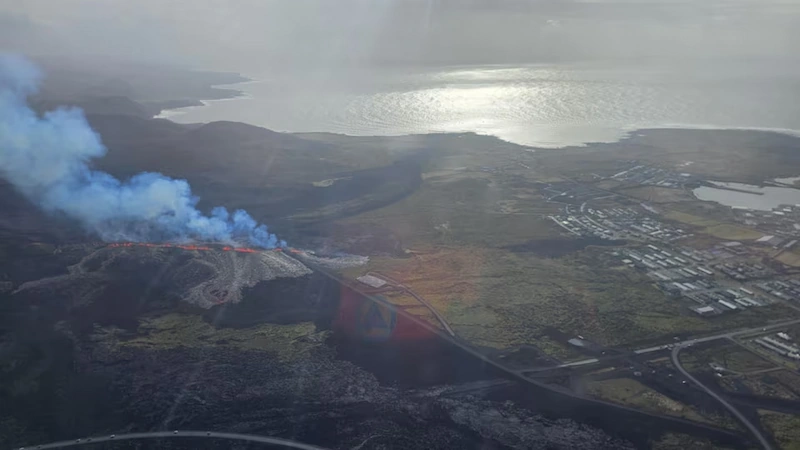


In a dazzling display of nature's might, a volcano roared to life south of Reykjavik in Iceland, casting a fiery tapestry of orange and red hues across the sky. The eruption, which prompted the evacuation of tourists and residents, added to the country's reputation as a land of ice and fire, with its intricate mix of glaciers and active volcanoes.
Since 2021, Iceland has witnessed 11 eruptions near Reykjavik, as centuries-old geological systems reawakened from their slumber. The Icelandic Meteorological Office issued a stark warning as lava breached protective barriers near Grindavik, leading to the swift evacuation of residents and the closure of the Blue Lagoon luxury spa.
Although the eruption was deemed limited in scale by experts, memories of past lava flows into Grindavik served as a somber reminder of the unpredictable forces of nature. Thankfully, the eruptions on the Reykjanes peninsula have not disrupted air traffic or posed a significant threat to nearby Reykjavik.
Geologists anticipate that these fissure eruptions, characterized by lava flowing through cracks in the earth's crust, may continue for decades or even centuries to come. As Iceland's unique landscape continues to be shaped by these fiery events, the island remains a captivating destination for travelers seeking the raw beauty of nature at its most elemental.